Choosing a cat for a household involves much more than falling in love with a beautiful breed. Temperament, activity level, grooming needs, social habits, and the family’s daily routine all matter. Ragdoll family compatibility is often considered strong because these cats tend to be affectionate, calm, and interested in human companionship. Many Ragdolls enjoy following family members around the home without demanding constant activity. However, breed tendencies never guarantee an individual cat’s personality. Early experiences, health, socialization, and the home environment also shape behavior. Families should understand both the appealing qualities and practical responsibilities of living with a Ragdoll before deciding whether this gentle breed suits their household.
Ragdolls are large, semi-longhaired cats known for striking blue eyes and color-pointed coats. Their appearance attracts attention, but their social nature often makes the biggest impression after they join a home. Many prefer spending time near people instead of hiding for much of the day.
That tendency can work well in homes where family members enjoy interacting with their pets. A Ragdoll may sit nearby during homework, follow someone into the kitchen, or settle beside the family during an evening movie. Still, affection varies between individual cats. Some love laps, while others prefer simply sharing the same room.
Families should avoid assuming every Ragdoll enjoys being carried. The breed’s name is associated with a relaxed reputation, yet each cat has personal boundaries. Children and adults should always allow the cat to move away when it wants space.
Understanding those boundaries is an important part of Ragdoll family compatibility. A successful relationship develops when people respect feline communication instead of expecting the cat to tolerate every interaction.
How Ragdolls Fit Into Everyday Family Life
A typical family home can be busy. Doors open, phones ring, children play, visitors arrive, and daily schedules change. Fortunately, many well-socialized Ragdolls can adapt to normal household activity when they have safe places to retreat.
Predictability still helps. Cats often feel more secure when feeding, play, grooming, and quiet periods follow familiar patterns. Families do not need an exact schedule, but consistency can make everyday life easier.
Ragdolls are often described as moderately playful rather than constantly energetic. They may enjoy chasing wand toys, batting lightweight toys, exploring tunnels, or climbing a cat tree. Afterward, many are happy to relax near their people.
This balance contributes to Ragdoll family compatibility because households can enjoy interactive play without managing an extremely high-energy pet throughout the day. However, Ragdolls still need daily activity. A calm personality should never be mistaken for a lack of physical or mental needs.
Interactive play provides exercise and creates opportunities for positive family involvement. Different household members can participate, provided everyone follows safe play practices. Hands and feet should not become toys because that can encourage biting or grabbing.
The home’s physical setup matters too. Ragdolls can become large adults, so sturdy cat furniture is helpful. Choose stable scratching posts, strong climbing structures, and beds that comfortably support a larger cat.
Indoor living also requires enrichment. Window perches, scratching surfaces, hiding places, puzzle feeders, and rotating toys can keep the environment interesting. These resources become particularly important when the household is away for several hours.
Because many Ragdolls enjoy company, families should consider how often the cat will be alone. A household with different schedules may naturally provide companionship throughout the day. In contrast, a home that remains empty for long periods may require extra planning.
Being social does not automatically mean a Ragdoll will develop separation problems. However, every cat needs opportunities to feel comfortable independently. Encouraging solo play and providing restful spaces can help create a balanced routine.
Household rules should also remain consistent. If the cat cannot climb onto a certain surface, everyone should follow the same approach. Mixed responses can confuse the animal and make training more difficult.
Positive reinforcement works better than punishment. Reward desirable behavior with attention, play, or appropriate treats. Meanwhile, redirect unwanted scratching toward suitable surfaces rather than frightening or physically punishing the cat.
These everyday habits can strengthen Ragdoll family compatibility because they create a home where the cat understands what to expect and has healthy outlets for natural behavior.
Ragdolls, Children, and Respectful Interaction
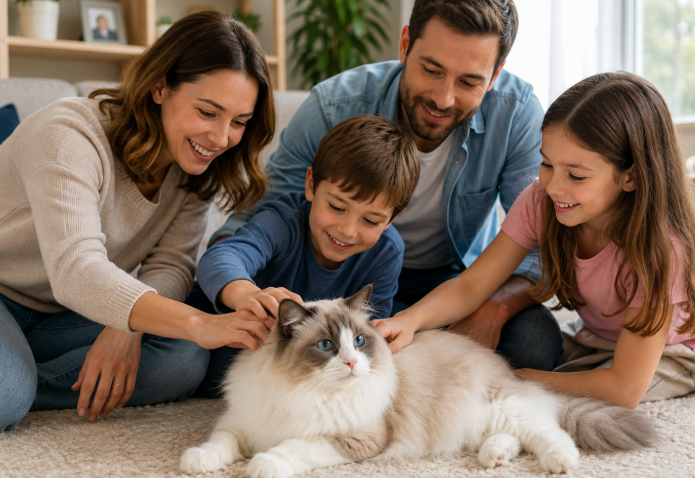
Families with children often want to know whether a Ragdoll can become a safe and affectionate companion. Many can live successfully with children, especially when interactions remain calm and supervised. However, the child’s behavior matters just as much as the cat’s temperament.
Young children should learn that cats are living animals rather than toys. Pulling fur, grabbing tails, chasing, squeezing, or disturbing a sleeping cat can create fear and defensive behavior. Even a generally gentle cat may scratch or bite when frightened or hurt.
For this reason, Ragdoll family compatibility depends partly on teaching children appropriate boundaries. Show them how to stroke the cat gently along the back or sides. They should also learn to recognize when the cat wants to leave.
Body language offers important clues. Flattened ears, a rapidly moving tail, tense muscles, growling, hiding, or repeated attempts to escape can indicate discomfort. Children should stop interacting when they see these signals.
Adults should supervise interactions with very young children. Supervision protects both the child and the cat. It also gives parents an opportunity to demonstrate respectful pet handling.
Children can participate in age-appropriate care as they grow. They might refill a water bowl with supervision, help prepare toys, or gently brush the coat. These tasks can build positive relationships, but adults must remain responsible for the cat’s essential needs.
Play sessions are another good way to involve children. Wand toys create distance between hands and claws while allowing the cat to chase and pounce. However, an adult should store string-based toys safely after play because loose strings can become dangerous if swallowed.
Quiet companionship can be equally valuable. A child reading beside a resting Ragdoll may develop a bond without constantly touching the cat. This type of interaction can suit cats that enjoy company but do not always want physical handling.
Families should also provide child-free spaces. A tall cat tree, quiet room, covered bed, or secure perch gives the cat somewhere to rest without interruption. Everyone should understand that these spaces belong to the cat.
A Ragdoll kitten may require more supervision than a mature cat because kittens are curious, energetic, and still learning appropriate play. Likewise, children may become overly excited around a new kitten. Clear rules from the beginning can prevent many problems.
Older Ragdolls have different needs. They may become less tolerant of rough handling because of arthritis, dental discomfort, or other age-related issues. Therefore, family interactions should adjust as the cat ages.
When children understand kindness and boundaries, Ragdoll family compatibility can be excellent. The relationship becomes stronger because both the cat and child learn to interact in ways that feel safe.
Living With Other Cats and Family Dogs
Many households already have pets when they consider adding a Ragdoll. Fortunately, individual Ragdolls can live successfully with other cats and cat-friendly dogs. Still, successful relationships depend heavily on temperament and careful introductions.
Never place unfamiliar animals together and expect them to become friends immediately. Cats rely strongly on scent and territory, so sudden introductions can create fear or conflict.
Start by giving the new cat a separate room with food, water, litter, scratching surfaces, toys, hiding places, and bedding. This space allows the Ragdoll to adjust without immediately confronting another animal.
Scent introductions can come next. Bedding or other safe items carrying each animal’s scent can help them become familiar before direct contact. Later, controlled visual introductions can occur at a comfortable distance.
Progress gradually. Some pets adjust within days, while others need weeks or longer. There is no benefit in rushing the process.
This careful approach can improve Ragdoll family compatibility in multi-pet households. It gives each animal time to process the change while reducing the chance of a frightening first encounter.
Dogs require particular consideration. A calm dog with previous positive experience around cats may be easier to introduce. In contrast, a dog with intense chasing or predatory behavior can create serious risks.
The cat should always have escape routes and elevated spaces that the dog cannot reach. Food and litter areas may also need separation to prevent competition or unwanted access.
Another cat can provide companionship, but personality matching matters more than breed alone. A confident, playful cat may overwhelm a timid Ragdoll. Likewise, a very active young cat might frustrate an older companion that prefers quiet rest.
Provide enough resources for every cat. Multiple litter boxes, feeding areas, water stations, scratching posts, resting places, and elevated spaces can reduce competition. Placing all resources in one location may force cats into unwanted encounters.
Watch for subtle tension. Blocking hallways, staring, guarding food, chasing, or preventing another cat from reaching the litter box can indicate conflict. Cats do not need to fight loudly for a relationship to become stressful.
Not every pair of pets will become close friends. Peaceful coexistence is already a successful outcome. One animal may sleep upstairs while another prefers the living room, yet both can feel secure.
Therefore, families evaluating Ragdoll family compatibility should focus on individual personalities rather than assuming the breed will automatically accept every existing pet.
Grooming, Care, and the Family’s Responsibilities
A Ragdoll’s beautiful coat brings regular care responsibilities. Their semi-long hair can develop tangles, especially around areas where friction occurs. Routine brushing helps remove loose fur and allows owners to notice skin changes early.
Several short grooming sessions each week may work well for many cats. Individual coat condition will determine the exact schedule. Seasonal shedding may require more frequent attention.
Families should decide who handles grooming before bringing a cat home. Children can assist when appropriate, but an adult should make sure the coat receives consistent care.
Nail care, dental health, parasite prevention, nutrition, and veterinary visits also belong in the long-term plan. These responsibilities continue even when family schedules become busy.
Financial preparation is another part of responsible Ragdoll family compatibility. Families need to budget for quality food, litter, routine veterinary care, grooming tools, enrichment, and unexpected medical expenses.
Ragdolls can also be substantial cats, so products should suit their size. Small litter boxes, unstable cat trees, and cramped carriers may become uncomfortable as a kitten reaches adulthood.
A large litter box gives the cat room to turn and dig comfortably. Similarly, a sturdy carrier makes veterinary travel safer. Families should introduce the carrier positively rather than only bringing it out before stressful appointments.
Diet deserves careful attention because overfeeding can contribute to excess weight. Portion needs vary according to age, activity, health, and the food being offered. A veterinarian can help determine an appropriate feeding approach.
Fresh water should always remain accessible. Some households provide multiple water stations, especially in larger homes. Clean bowls regularly and monitor normal drinking patterns.
Regular veterinary examinations remain important even when a cat appears healthy. Preventive care can identify problems earlier and gives families an opportunity to discuss nutrition, behavior, dental health, weight, and parasite control.
These practical responsibilities are easy to overlook when focusing on the breed’s appearance and affectionate reputation. However, Ragdoll family compatibility is strongest when the household can provide both emotional companionship and dependable care.
Choosing Whether a Ragdoll Fits Your Household
Ragdolls can be wonderful companions, but no breed is ideal for every family. Before bringing one home, consider the household’s expectations honestly.
A family seeking an interactive indoor cat may appreciate the breed’s social tendencies. Likewise, people who enjoy grooming, playing, and spending quiet time with a pet may find the relationship rewarding.
However, households wanting a highly independent cat with minimal grooming needs may prefer another option. Ragdolls still require time, attention, enrichment, coat care, and veterinary support.
Consider noise and activity levels too. Many cats can adapt to lively homes, but they still need places where nobody bothers them. A household without quiet retreat areas may be stressful for a sensitive individual.
Travel habits also matter. Frequent trips require reliable pet care. Leaving extra food and water does not replace appropriate supervision during extended absences.
Families considering a kitten should remember that temperament can develop as the animal matures. Adoption from a responsible breeder or rescue can provide useful information about health, socialization, and personality.
If buying from a breeder, research health testing practices and living conditions carefully. Responsible breeding focuses on health and temperament rather than appearance alone. Avoid sellers who will not answer reasonable questions about their cats.
Adopting an adult Ragdoll or Ragdoll mix can also be an excellent choice. An adult’s established personality may make it easier to judge whether the cat suits children, other pets, or a particular household routine.
Ultimately, Ragdoll family compatibility depends on matching the needs of the individual cat with the realities of the household. Breed characteristics can guide expectations, but they should never replace careful observation and responsible planning.
A successful family relationship comes from mutual respect. Give the cat safe spaces, daily interaction, appropriate play, consistent care, and freedom to set boundaries. In return, many Ragdolls become affectionate companions that enjoy participating quietly in everyday household life.
For families prepared for grooming, indoor enrichment, veterinary care, and regular companionship, Ragdoll family compatibility can be a major strength of the breed. The goal should not be finding a cat that tolerates family life. Instead, create a home where the cat can genuinely feel secure, comfortable, and included.
FAQ
1. Are Ragdoll Cats Good for Families With Children?
Many Ragdolls can live happily with children when interactions are gentle and supervised. Children should learn feline body language and respect the cat’s need to walk away or rest without interruption.
2. Can Ragdolls Live With Dogs?
Yes, some Ragdolls live successfully with calm, cat-friendly dogs. Introductions should happen gradually, and the cat should always have safe spaces and elevated escape routes.
3. Do Ragdolls Need Someone at Home All Day?
Not necessarily. However, many enjoy companionship and benefit from regular interaction. Provide enrichment, comfortable resting areas, toys, and a predictable routine when family members are away.
4. Are Ragdolls Suitable for Busy Households?
They can be, provided the household still has enough time for grooming, play, feeding, cleaning, veterinary care, and social interaction. A quiet retreat is also important in an active home.
5. What Makes a Ragdoll a Good Family Companion?
Their commonly reported affectionate, social, and moderately playful temperament can suit many households. However, Ragdoll family compatibility ultimately depends on the individual cat, respectful handling, proper introductions, and consistent care.