Few breeds are as consistently recommended for households with children as Ragdolls, and Ragdoll Cats and Family Life compatibility is one of the most common reasons families choose the breed. Known for their calm temperament, tolerance for handling, and genuine enjoyment of human company, Ragdolls tend to adapt well to the noise, activity, and unpredictability that often come with family living.
That said, no breed is universally perfect for every household, and understanding both the strengths and the realistic considerations helps families set their Ragdoll up for success.
Temperament That Suits Family Life
A major reason Ragdoll Cats and Family Life often go well together comes down to temperament. Ragdolls are generally described as gentle, easygoing, and unusually tolerant of handling compared to more independent breeds. This makes them more forgiving of the occasional overly enthusiastic hug or accidental tail step that can happen in households with young children.
Their people-oriented nature also means Ragdolls often actively seek out family interaction rather than retreating from a busy household, which many families find appealing.
How Ragdolls Typically Interact With Children
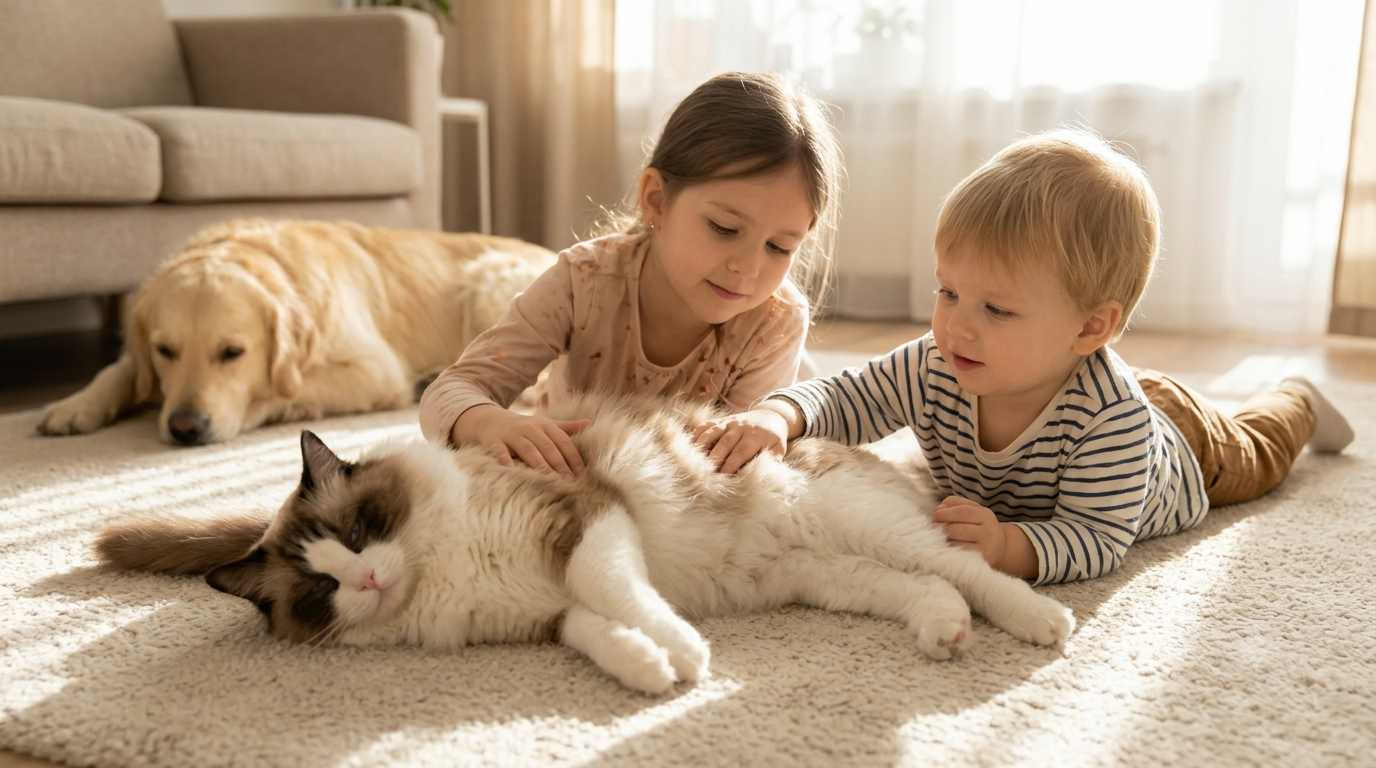
Ragdolls are frequently noted for their patience with children, often tolerating handling that might cause a more skittish breed to become defensive or withdrawn. Even so, supervision remains important, particularly with very young children who may not yet understand appropriate gentleness with animals.
Teaching children how to interact respectfully, including proper handling and recognizing signs a cat wants space, helps create a positive relationship for both the child and the cat, regardless of breed.
Adapting to Noise and Activity
Busy households with multiple family members, frequent visitors, or other pets can be overwhelming for more sensitive cat breeds, but Ragdolls generally adapt reasonably well to moderate noise and activity levels. Their calm baseline temperament tends to help them remain settled even amid typical family chaos.
That said, individual personality still plays a role, and providing a quiet retreat space within the home allows your cat to decompress if things become overwhelming, regardless of how generally adaptable the breed tends to be.
Considerations for Multi-Pet Households
Families with existing pets often wonder how a Ragdoll will fit in. Ragdolls are generally considered sociable and adaptable with proper introductions, often getting along well with other cats and even dogs when introductions are handled gradually and thoughtfully.
As with any pet introduction, rushing the process can create unnecessary stress, so a gradual, supervised approach tends to produce better long-term results than an immediate introduction.
Attention and Time Commitment
Because Ragdolls are so people-oriented, Ragdoll Cats and Family Life compatibility also depends on the family’s ability to provide social interaction. Families with someone home for much of the day, or with multiple people to share attention, are often a particularly good match, since Ragdolls tend to enjoy consistent companionship.
Busy families should still consider enrichment and companionship options for a Ragdoll left alone for extended periods, since the breed’s social nature means isolation isn’t ideal, even if they can manage reasonable stretches alone.
Things to Keep in Mind
While Ragdolls are often a strong match for families, a few practical considerations are worth noting. Regular grooming, though not overly intensive, still requires consistent attention. Their trusting nature also means keeping them as indoor cats is generally recommended, since they may be less cautious around outdoor hazards.
Health considerations, including the breed’s predisposition toward hypertrophic cardiomyopathy, are also worth discussing with a veterinarian and factoring into long-term care planning.
Conclusion
Ragdoll Cats and Family Life compatibility tends to be strong thanks to the breed’s gentle temperament, tolerance for handling, and genuine enjoyment of company. While supervision with young children and thoughtful introductions to other pets remain important, most families find Ragdolls adapt well to the noise, activity, and affection that come with household life.
With the right preparation and ongoing care, Ragdolls often become deeply bonded, patient companions well suited to busy family environments.
FAQ
1. Are Ragdoll cats good with young children? Yes, Ragdolls are generally known for their patience and tolerance of handling, though supervision is still recommended with very young children.
2. Do Ragdolls do well in busy, noisy households? Most Ragdolls adapt reasonably well to moderate noise and activity thanks to their calm baseline temperament, though individual personality varies.
3. Can Ragdolls get along with other pets? Yes, with gradual, supervised introductions, Ragdolls generally adapt well to other cats and even dogs.
4. Is a Ragdoll a good choice for a busy family? Ragdolls do best with consistent companionship, so busy families should plan for enrichment or company during long absences.
5. Do Ragdolls need a lot of extra care compared to other breeds? Care needs are moderate overall, though regular grooming and awareness of breed-specific health considerations are worth factoring into ongoing care.