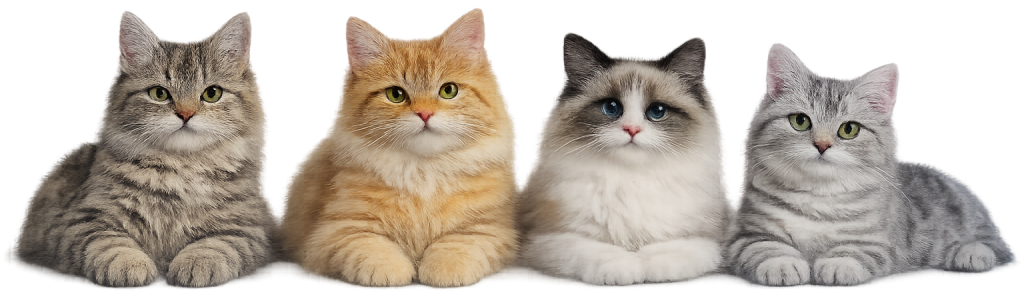
Bringing home a Ragdoll kitten is exciting, but the breed’s laid-back reputation as adults can create the wrong impression during kittenhood. Ragdoll Kitten Care actually requires the same attention to nutrition, health monitoring, and socialization as any other breed, with a few extra considerations tied to their slower growth rate and famously trusting temperament. Getting the early months right sets the foundation for the calm, affectionate cat Ragdolls are known to become.
Ragdolls mature more slowly than many breeds, often not reaching full adult size until three to four years of age. This means kittenhood habits around feeding, handling, and environment have a longer runway to shape their development. Understanding what your kitten needs at each stage helps you avoid common mistakes and catch potential problems early.
Preparing Your Home Before Kitten Arrives
Good Ragdoll Kitten Care starts before your kitten ever walks through the door. Ragdolls are curious and trusting, sometimes to a fault, so kitten-proofing matters. Secure loose cords, small objects, string, and anything that could be chewed or swallowed, since Ragdoll kittens are known for exploring with their mouths.
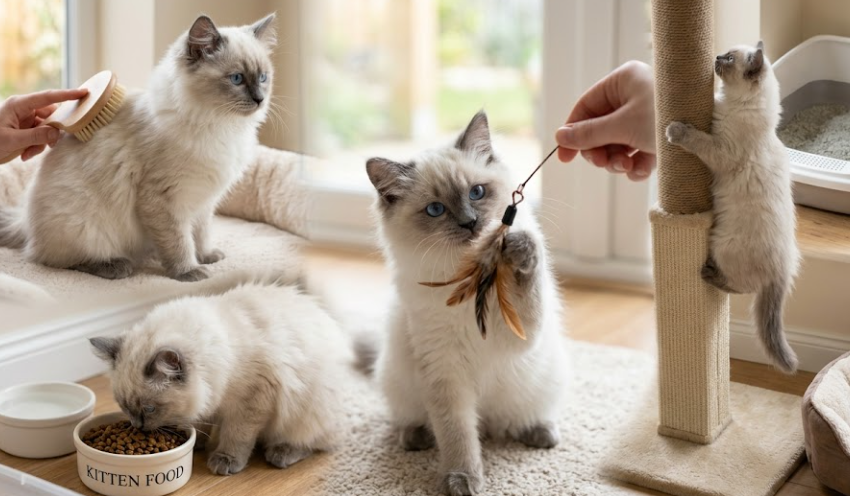
Set up a dedicated space with a litter box, food and water bowls, a scratching post, and a cozy bed before bringing your kitten home. Keeping the initial space small and contained for the first few days helps a kitten adjust without feeling overwhelmed by a full-size house.
Choose a litter box with low sides for easy access and place it somewhere quiet, away from food and high-traffic areas.
Feeding Your Ragdoll Kitten
Nutrition is one of the most important parts of Ragdoll Kitten Care because of the breed’s extended growth period. Kittens generally need a high-quality, kitten-specific formula that supports steady growth, since kitten food is formulated with more calories and nutrients than adult formulas.
Most kittens do well with small, frequent meals, gradually transitioning to two to three meals a day as they grow. Because growth schedules and calorie needs vary by kitten and formula, following the feeding guidelines on your chosen food and checking in with your veterinarian is the safest approach rather than relying on a fixed schedule.
Fresh water should always be available. Some owners find that a water fountain encourages kittens to drink more consistently, which supports healthy kidney and urinary function later in life.
Avoid sudden food changes, since abrupt switches can trigger digestive upset. If you need to change formulas, transition gradually over seven to ten days by mixing increasing amounts of the new food with the old.
Health Milestones and Veterinary Care
Ragdoll Kitten Care includes staying on top of a veterinary schedule during the first several months of life. Kittens typically need a series of vaccinations starting around six to eight weeks of age, with boosters continuing over the following months. Your veterinarian will confirm the exact schedule, since timing can vary based on your kitten’s history and local guidelines.
Deworming is usually recommended starting in early kittenhood, since intestinal parasites are common in young cats. Your vet will advise on frequency based on your kitten’s risk factors.
Spaying or neutering is generally discussed around five to six months of age, though your veterinarian may recommend a different timeline depending on your kitten’s health and growth.
Ragdolls are a breed with a known predisposition toward hypertrophic cardiomyopathy, a heart condition. While this isn’t usually a kitten-stage concern, mentioning the breed’s genetic background to your veterinarian helps them tailor long-term wellness monitoring.
Grooming and Coat Care
Despite their long fur, Ragdoll Kitten Care doesn’t require intensive grooming compared to some other long-haired breeds, since their coat lacks a heavy undercoat and is less prone to matting. Even so, regular brushing two to three times a week helps prevent tangles and reduces loose fur that could otherwise be swallowed and contribute to hairballs.
Introducing grooming early, including brushing, nail trims, and gentle handling of paws and ears, helps kittens grow comfortable with routine care. This early exposure also makes future veterinary visits and at-home care much easier.
Bathing usually isn’t necessary for healthy kittens, though occasional baths can help if a kitten gets into something messy or as part of getting them used to handling.
Socialization and Behavior
Ragdolls are known for being especially people-oriented, and early socialization plays a large role in shaping that temperament. Ragdoll Kitten Care benefits from gentle, positive exposure to handling, household sounds, other pets, and visitors during the first few months of life.
Kittens that are calmly introduced to new experiences tend to grow into more confident, adaptable adults. Avoid overwhelming a young kitten with too much stimulation at once, and always give them a safe space to retreat to if they seem stressed.
Play is also an important part of development. Interactive toys, wand games, and short daily play sessions help kittens build coordination, release energy, and strengthen their bond with you.
Creating a Safe, Enriching Environment
Ragdoll kittens tend to be relaxed and floor-loving compared to some more athletic breeds, but they still benefit from vertical space, scratching options, and mental stimulation. Cat trees, window perches, and puzzle feeders give kittens outlets for natural behaviors like climbing and problem-solving.
Because Ragdolls are often described as trusting and less cautious than other breeds, keeping them as indoor-only cats is commonly recommended to protect them from outdoor hazards like traffic, predators, and parasites.
Conclusion
This Complete Guide to Ragdoll Kitten Care highlights how early nutrition, veterinary attention, grooming, and socialization shape the calm, affectionate adult cat Ragdolls are known for. Because the breed matures slowly, the habits and care routines established in kittenhood have a long runway to influence your cat’s health and temperament.
With consistent feeding, regular veterinary checkups, gentle grooming routines, and plenty of positive social experiences, your Ragdoll kitten has a strong foundation for a healthy, well-adjusted life.
FAQ
1. When do Ragdoll kittens reach full size? Ragdolls mature slowly and often don’t reach full adult size until three to four years of age.
2. How often should I feed my Ragdoll kitten? Kittens typically need small, frequent meals of a kitten-specific formula, transitioning to two to three meals a day as they grow; your vet can confirm the right schedule for your kitten.
3. Do Ragdoll kittens need a lot of grooming? Regular brushing two to three times a week is usually enough, since their coat has less undercoat and is less prone to matting than some other long-haired breeds.
4. When should my Ragdoll kitten be spayed or neutered? This is commonly discussed around five to six months of age, though your veterinarian may recommend a different timeline based on your kitten’s health.
5. Should Ragdoll kittens be allowed outdoors? Most owners and breeders recommend keeping Ragdolls as indoor-only cats due to their trusting nature and reduced awareness of outdoor hazards.