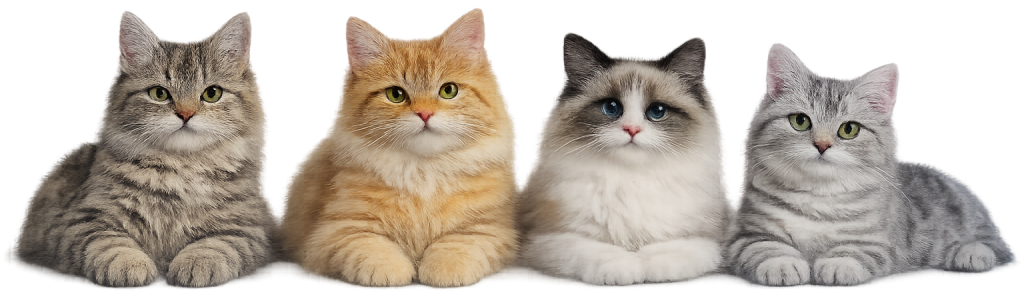
Ragdolls are famous for their soft, beautiful coats, but that luxurious fur can quickly end up on furniture, clothing, and floors. Fortunately, you can reduce Ragdoll cat shedding with a consistent grooming routine, balanced nutrition, and a few simple changes at home. Shedding itself is normal and helps cats replace old or damaged hair. However, unusually heavy hair loss may point to poor coat care, stress, parasites, skin irritation, or another health concern. Instead of trying to stop shedding completely, focus on keeping your cat’s skin and coat healthy. With regular care, you can catch loose fur before it spreads around your home while also making your Ragdoll more comfortable.
Ragdolls have medium to long coats with a soft, silky texture. Unlike some long-haired breeds, their coats usually have less of a dense undercoat. Even so, they can still shed a noticeable amount throughout the year. Seasonal changes may also increase hair loss. Indoor cats can experience less predictable shedding cycles because artificial lighting and controlled temperatures affect their environment.
Age can influence shedding as well. A young cat’s coat changes as it matures, while older cats may become less effective at grooming themselves. Diet, hydration, stress, and general health also affect coat quality. Therefore, understanding what is normal for your individual cat makes it easier to notice meaningful changes.
You should expect some loose hair when brushing your Ragdoll. Finding fur on a favorite sleeping spot is also normal. However, bald patches, irritated skin, sores, constant scratching, or sudden dramatic hair loss deserve closer attention. These signs go beyond routine shedding and may require veterinary care.
Build a Consistent Grooming Routine
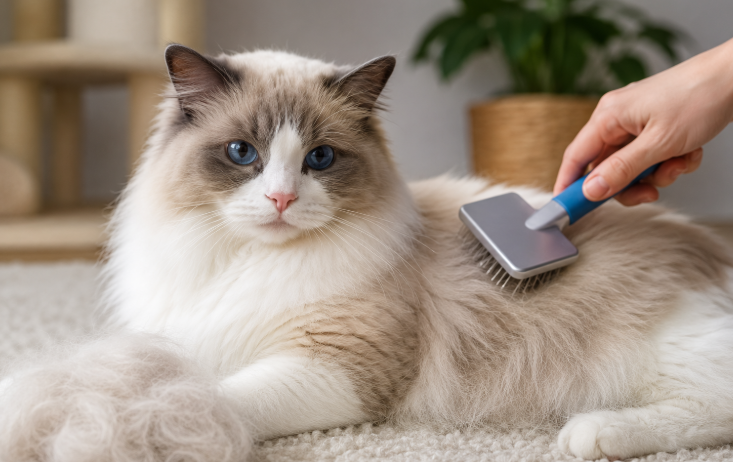
Regular brushing is one of the easiest ways to reduce Ragdoll cat shedding before loose hair reaches your sofa. For many Ragdolls, brushing several times each week works well. During heavier shedding periods, daily grooming may be useful. The goal is consistency rather than aggressive removal of as much hair as possible in one session.
Choose grooming tools that move comfortably through the coat without pulling healthy hair. A wide-toothed comb can help locate small tangles. Meanwhile, a quality slicker or pin brush can collect loose hairs from the outer coat. Work gently from the head toward the tail while following the natural direction of hair growth.
Pay special attention to areas where friction causes tangles. These include behind the front legs, around the chest, beneath the belly, and near the hind legs. If you find a knot, avoid pulling hard. Instead, hold the fur close to the skin and carefully loosen the tangle from its outer edge.
Short grooming sessions are often more effective than occasional long ones. Five to ten relaxed minutes can collect a surprising amount of loose fur. In addition, frequent sessions help your cat become comfortable with handling.
Create a positive experience by grooming when your Ragdoll is calm. A quiet room can help, especially if your cat becomes distracted easily. You can also follow the session with play, praise, or a suitable treat. Over time, grooming may become part of a predictable routine rather than an unpleasant chore.
Brushing also gives you an opportunity to inspect the skin. Look for redness, flakes, bumps, parasites, wounds, or unusual thinning. Early detection can make skin and coat problems easier to address.
Bathing can occasionally help remove loose hair, although most healthy Ragdolls do not need frequent baths. Too much bathing may dry the skin, particularly when unsuitable shampoos are used. If a bath is necessary, choose a cat-safe product and rinse it thoroughly. Never use human shampoo because feline skin has different needs.
Proper grooming does more than reduce Ragdoll cat shedding. It can prevent uncomfortable tangles and limit the amount of loose hair your cat swallows while self-grooming. As a result, consistent coat care may also help with hairball management.
Still, more brushing is not always better. Excessive brushing or harsh deshedding tools can irritate the skin and damage healthy hair. Use gentle pressure and stop if you notice discomfort, redness, or excessive pulling.
Support Healthy Skin Through Good Nutrition
A beautiful coat starts with proper nutrition. Hair consists largely of protein, so cats need enough high-quality dietary protein to support normal hair growth. Cats are obligate carnivores, which means animal-derived nutrients play an important role in their overall health.
A complete and balanced cat food designed for your Ragdoll’s life stage should provide essential nutrients in appropriate amounts. Rather than focusing on one trendy ingredient, consider the quality and nutritional completeness of the entire diet.
Essential fatty acids also support normal skin and coat condition. When the skin stays healthy, the coat is more likely to remain smooth and resilient. However, supplements are not automatically necessary. Adding oils or supplements without professional guidance can create nutritional imbalances or add unnecessary calories.
If you want to reduce Ragdoll cat shedding, avoid assuming that every coat issue needs a supplement. First, review your cat’s regular diet. If you suspect a nutritional deficiency, food intolerance, or another dietary problem, discuss it with your veterinarian before making major changes.
Hydration matters too. Cats naturally have a relatively low thirst drive, so some do not drink much from a standing bowl. Providing fresh water in several accessible locations may encourage drinking. Some cats prefer fountains, while others prefer wide bowls that do not press against their whiskers.
Wet food can also contribute moisture to the diet when it is appropriate for your cat. However, any major food transition should happen gradually. Sudden dietary changes can cause digestive upset.
Maintaining a healthy body condition is equally important. Excess weight can make self-grooming difficult because a cat may struggle to reach certain areas. Consequently, loose fur and dandruff may accumulate around the back and hindquarters.
Regular play helps support weight management and general well-being. Interactive toys, climbing opportunities, and short play sessions can encourage movement without making exercise feel forced.
Stress can affect grooming habits as well. Some cats groom excessively when anxious, while others groom less. Either pattern may change the appearance of the coat. Therefore, a stable environment can contribute to healthier skin and hair.
Provide comfortable hiding areas, elevated resting spaces, scratching surfaces, and predictable daily routines. If you have several cats, make sure they have enough access to food, water, litter boxes, resting areas, and other resources. Competition can create subtle stress even when cats do not openly fight.
These measures work together to reduce Ragdoll cat shedding caused or worsened by poor coat condition. They also support broader health rather than treating loose fur as an isolated problem.
Control Loose Fur Around Your Home
Even excellent grooming cannot eliminate normal shedding. Therefore, managing the environment makes life with a fluffy Ragdoll much easier. A few simple habits can prevent loose hair from building up around the home.
Wash your cat’s blankets and bedding regularly. These surfaces often collect large amounts of hair because cats spend hours sleeping in the same places. A washable cover on a favorite chair or sofa can also simplify cleaning.
Vacuum high-traffic areas frequently rather than waiting for visible piles of fur. Upholstery attachments work well on sofas and fabric chairs. Meanwhile, reusable lint rollers or slightly damp cleaning tools can collect hair from smaller surfaces.
An air purifier with an appropriate filter may help capture some airborne particles and dander. However, it should complement grooming and cleaning rather than replace them.
Regular cleaning can make the results of your efforts to reduce Ragdoll cat shedding much more noticeable. If loose hair is removed from the coat and environment frequently, it has less opportunity to accumulate.
Humidity may also affect skin comfort. Extremely dry indoor air can contribute to dry skin in some cats. If your home becomes very dry, maintaining comfortable indoor humidity may help. However, avoid excessive humidity because it can encourage mold and other household problems.
Another useful habit is keeping your cat’s favorite resting areas easy to clean. Rather than fighting fur across every piece of furniture, provide appealing beds and blankets in places your cat already likes. Many Ragdolls enjoy staying close to their people, so positioning washable beds near desks, sofas, or bedrooms can work well.
Never shave a healthy Ragdoll simply because it sheds. Shaving does not address the reason hair naturally falls out. Moreover, the coat provides protection and helps regulate comfort. Medical shaving may sometimes be necessary, but that decision should involve a veterinarian or experienced professional.
Similarly, be careful with products marketed as instant shedding cures. There is no safe method that permanently switches off normal hair replacement. A better goal is to reduce Ragdoll cat shedding through coat maintenance and overall health support.
Seasonal increases are especially important to recognize. Your cat may release more loose fur as environmental conditions change. During these periods, adding one or two extra brushing sessions each week may be enough to keep the situation manageable.
You may also notice that shedding changes after moving homes or altering household routines. Stress, temperature, and lighting can influence coat and grooming behavior. Give your cat time to adjust while maintaining predictable feeding, grooming, and play schedules.
Know When Heavy Shedding Needs Veterinary Attention
Normal shedding should not leave obvious bald areas. If your Ragdoll suddenly loses much more hair than usual, investigate the change instead of simply increasing brushing.
Parasites, allergies, fungal problems, bacterial infections, hormonal disorders, pain, and other medical conditions can affect the skin or coat. Excessive licking can also create hair loss that initially looks like ordinary shedding.
Watch your cat’s behavior closely. Frequent scratching, biting at the skin, repeated licking, restlessness, or sensitivity when touched can indicate discomfort. Changes in appetite, thirst, weight, energy, or litter box habits are also worth noting.
A veterinarian can examine the skin and determine whether diagnostic testing is necessary. Depending on the symptoms, testing may include skin samples, parasite checks, blood tests, or other procedures.
Do not rely on home remedies for unexplained hair loss. Essential oils are particularly risky because several can be harmful to cats. Likewise, never give human medications or apply human skin treatments unless a veterinarian specifically instructs you to do so.
Keeping a simple record can help when shedding changes suddenly. Note when the problem started, where hair loss appears, whether your cat scratches or licks the area, and whether anything changed recently. A few clear photographs can also help document progression.
Once medical causes have been addressed, you can return to a practical maintenance routine to reduce Ragdoll cat shedding during normal coat cycles.
Create a Routine You Can Maintain
The best shedding plan is one you can follow consistently. You do not need a complicated collection of grooming products. Instead, combine gentle brushing, complete nutrition, adequate hydration, regular cleaning, and attention to skin health.
For example, schedule short brushing sessions several times each week. Check common tangle areas during each session. Wash bedding regularly and vacuum your cat’s favorite spaces. At the same time, watch for changes in the skin or grooming behavior.
This routine can reduce Ragdoll cat shedding while keeping grooming manageable for both you and your cat. More importantly, it encourages regular observation. Because you handle the coat frequently, you are more likely to notice changes early.
Be patient if your Ragdoll dislikes brushing at first. Start with very short sessions and stop before your cat becomes frustrated. Gradually increase the duration as tolerance improves. Positive experiences usually produce better long-term results than forcing a long grooming session.
Remember that individual cats differ. One Ragdoll may need brushing twice a week, while another benefits from daily attention during seasonal changes. Coat length, age, health, activity, and grooming habits all affect what works best.
The aim is not a completely fur-free house. A healthy Ragdoll will naturally lose hair. Instead, your goal should be a comfortable cat, healthy skin, a well-maintained coat, and a reasonable amount of loose fur around your home.
When you reduce Ragdoll cat shedding through consistent care, you also gain another benefit: more opportunities to bond with your cat. Gentle grooming can become quiet one-on-one time, especially when introduced patiently.
Ultimately, excess loose fur becomes much easier to manage when you address it at the source. Regular brushing captures dead hair before it falls. Good nutrition supports healthy growth, while hydration and weight management support skin and grooming. A clean, low-stress environment completes the routine.
If shedding suddenly becomes extreme or comes with skin changes, do not dismiss it as a normal feature of the breed. Seek veterinary advice and address the underlying problem. Otherwise, a simple routine is often enough to reduce Ragdoll cat shedding and keep that famous silky coat looking its best.
FAQ
1. How Often Should I Brush a Ragdoll Cat?
Most Ragdolls benefit from brushing several times per week. Cats with longer coats or heavier seasonal hair loss may need daily attention. Keep sessions gentle and focus on areas where tangles develop easily.
2. Why Is My Ragdoll Suddenly Losing More Hair?
Seasonal changes can increase normal hair loss. However, sudden or severe changes can also result from stress, parasites, allergies, skin problems, or illness. Contact your veterinarian if you notice bald patches, irritation, itching, or behavioral changes.
3. Does Better Cat Food Help With Excessive Shedding?
A complete and balanced diet supports normal skin and hair growth. Protein, essential fatty acids, vitamins, and minerals all contribute to coat health. Ask your veterinarian before adding supplements because unnecessary supplementation may create nutritional problems.
4. Should I Shave My Ragdoll to Control Loose Fur?
Usually, no. Shaving does not stop the natural hair growth and replacement cycle. Regular brushing is generally a safer way to manage loose fur. Shaving may be appropriate for certain medical or severe matting situations under professional guidance.
5. Can Indoor Conditions Affect How Much a Ragdoll Sheds?
Yes. Indoor temperature, artificial lighting, humidity, stress, and seasonal changes can influence coat cycles. Consistent grooming and a comfortable home environment can reduce Ragdoll cat shedding and make normal hair loss easier to manage.