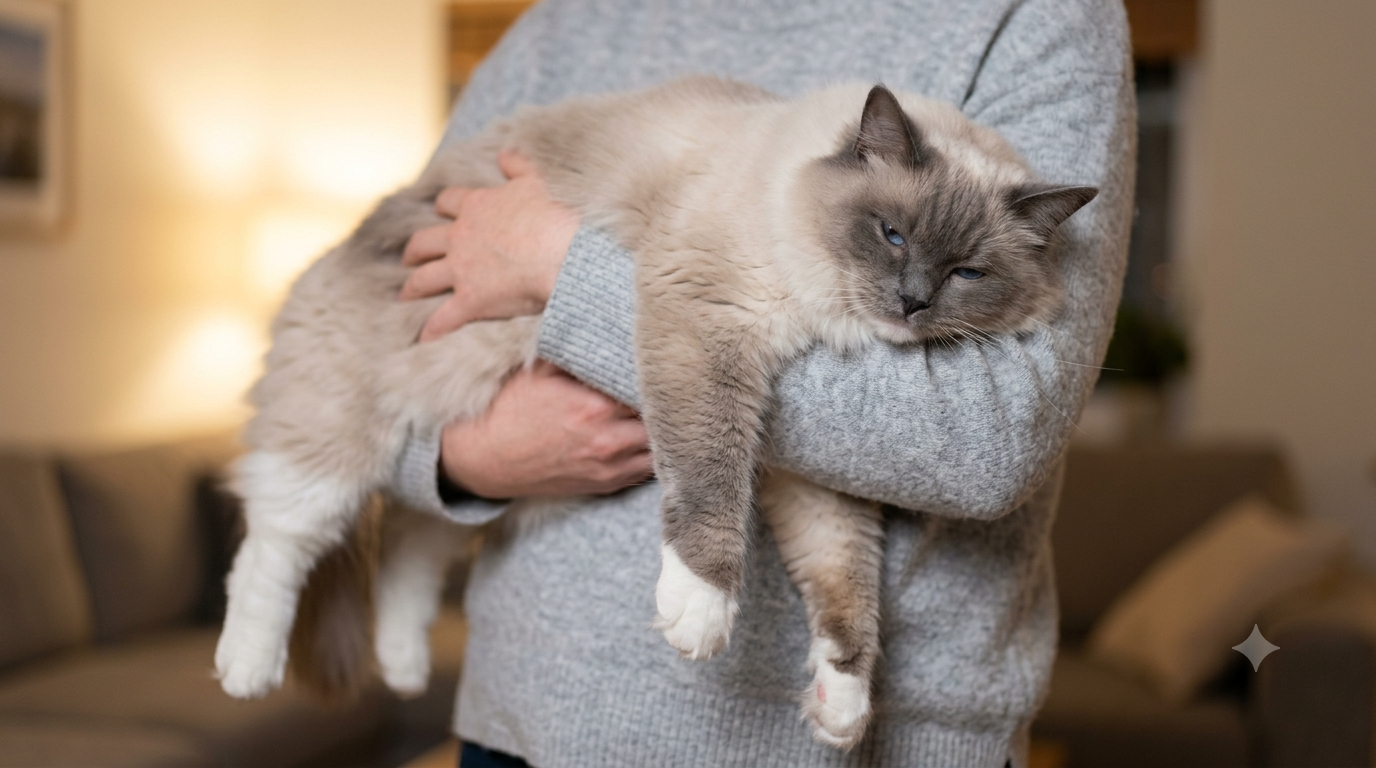
It’s the trait that gave the breed its name: Ragdoll Cats Go Limp when picked up, relaxing into your arms rather than tensing or resisting the way many cats do. This distinctive behavior has fascinated cat owners for decades and remains one of the most commonly asked questions about the breed. Understanding why it happens helps you appreciate the trait while still handling your cat safely and respectfully.
While the limpness is often described as almost dog-like docility, it’s rooted in a combination of temperament, trust, and physical relaxation rather than any single simple explanation.
The Origin of the “Ragdoll” Name
The breed’s name itself comes directly from this behavior. Early breeders in the 1960s noticed that these cats would go remarkably limp and relaxed when held, similar to a child’s ragdoll toy, and the trait became a defining characteristic used in developing and describing the breed.
Over generations of selective breeding, this tendency toward calm, relaxed handling became a consistent and recognizable trait associated with Ragdolls specifically, more so than in most other breeds.
Temperament and Trust
A major reason Ragdoll Cats Go Limp when held comes down to temperament. The breed is generally known for being unusually trusting, calm, and tolerant of handling compared to more independent or high-strung breeds. This trust extends to physical interaction, making cats more likely to relax into a hold rather than brace against it.
Cats that feel secure and unthreatened are naturally more likely to relax their muscles. Because Ragdolls tend to form close bonds with their owners and generally show less defensive wariness, this sense of security often translates into physical relaxation during handling.
Physical and Muscular Factors
Beyond temperament, some of the limpness may relate to muscle tone and relaxation response. Ragdolls are a large, generally low-strung breed, and their overall body language tends toward relaxed rather than alert, even outside of being held.
It’s worth noting that not every Ragdoll goes completely limp every time, and the degree of limpness can vary between individual cats, situations, and how comfortable a particular cat feels with a specific person.
When Limpness Isn’t Just Personality
While going limp is often simply a personality trait, it’s worth being aware that extreme lethargy, weakness, or limpness outside of typical handling situations can sometimes indicate a health issue rather than the breed’s characteristic relaxed response. If your cat seems unusually weak, uncoordinated, or limp even when not being held, this is different from the breed trait and warrants veterinary attention.
Distinguishing between a cat’s normal relaxed handling response and genuine weakness or lethargy is important, especially since the two can look similar to an unfamiliar observer.
Handling Your Ragdoll Safely
Even though Ragdolls tend to relax when held, proper support remains important. Always support your cat’s chest and hindquarters rather than allowing their body weight to hang unsupported, since limpness doesn’t mean a cat should be held in a way that strains their spine or limbs.
Because Ragdolls can become so relaxed that they seem less aware of their surroundings while held, it’s worth being mindful about height and stability when picking them up, particularly around young children who may not naturally support a cat’s body correctly.
Building on the Trait
Many owners find that this tendency toward relaxed handling makes Ragdolls easier to manage during grooming, nail trims, and veterinary visits compared to more resistant cats. Building positive associations with handling from kittenhood, using gentle, consistent techniques, can reinforce this natural tendency and make routine care easier throughout your cat’s life.
Conclusion
Ragdoll Cats Go Limp when held largely due to a combination of trust, calm temperament, and a naturally relaxed disposition that has been reinforced through selective breeding since the breed’s origin. While this trait makes for easier handling in many everyday situations, proper support and awareness of your cat’s body remain important.
Understanding the difference between this characteristic relaxed response and genuine lethargy or weakness also helps you stay alert to your cat’s health while enjoying one of the breed’s most endearing traits.
FAQ
1. Do all Ragdoll cats go limp when picked up? Most Ragdolls show some degree of this trait, though the intensity varies by individual cat and situation.
2. Is the limpness related to a medical condition? No, in most cases it’s a temperament trait tied to trust and relaxation, though sudden unexplained weakness outside of handling should be checked by a vet.
3. How did Ragdoll cats get their name? The breed was named for this characteristic limp, relaxed response to being held, first noted by early breeders in the 1960s.
4. Should I still support my Ragdoll’s body when holding them? Yes, proper support for the chest and hindquarters is still important even if your cat relaxes completely.
5. Does going limp mean my cat trusts me? It’s often associated with a sense of security and trust, though individual personality and familiarity with the handler also play a role.