Traveling with a cat requires more preparation than simply placing a carrier in the car and leaving home. Ragdoll cat travel safety becomes especially important because these large, social cats need secure handling, enough carrier space, and a calm environment throughout the journey. Some Ragdolls adapt well to short trips, while others find unfamiliar movement, sounds, and smells stressful. Fortunately, owners can make travel easier through gradual carrier training, careful planning, identification, appropriate hydration, and regular comfort checks. Whether you are driving to a veterinary appointment, moving to another city, or taking a longer trip, preparation reduces avoidable risks. The goal is not to make every Ragdoll love traveling. Instead, you want your cat to remain secure, comfortable, and as relaxed as possible from departure until arrival.
Cats generally prefer familiar territory, so travel can feel confusing. A Ragdoll that appears confident at home may become quiet, vocal, restless, or withdrawn inside a moving vehicle. These responses do not necessarily mean something is seriously wrong, but they show why owners should introduce travel gradually.
The carrier should become familiar long before a major trip. If it only appears before veterinary visits, your cat may quickly associate it with stressful experiences. Instead, keep the carrier accessible at home when possible.
Place comfortable bedding inside and allow your Ragdoll to investigate voluntarily. Treats, toys, or meals near the carrier can create positive associations. Over time, you can encourage the cat to enter without force.
This preparation forms the foundation of Ragdoll cat travel safety because getting a frightened cat into an unfamiliar carrier immediately before departure can increase stress for everyone.
Prepare Your Ragdoll Before the Journey
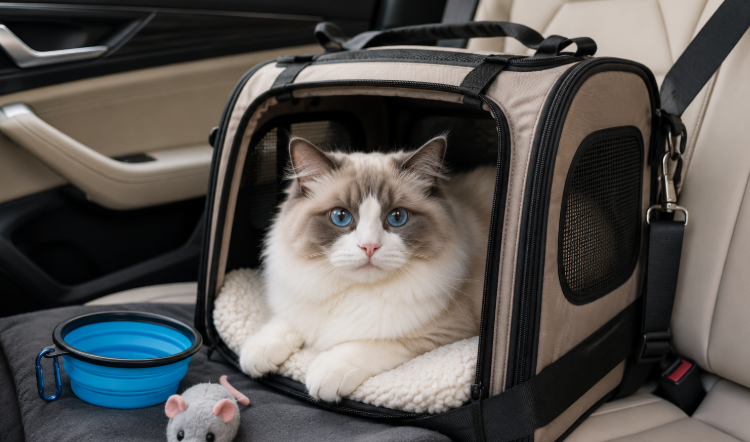
Choosing the correct carrier is one of the most important travel decisions. Ragdolls can become large adults, so a carrier designed for a small cat may not provide enough space or structural support.
Your cat should be able to stand, turn around, and lie comfortably. At the same time, the carrier should not be so oversized that your cat slides around during vehicle movement.
Look for secure closures and good ventilation. The carrier should also be sturdy enough to protect your cat during normal travel. Check doors, zippers, handles, and connection points before every journey.
A removable or washable liner can make cleanup easier. Place an absorbent pad beneath familiar bedding in case your cat urinates, vomits, or spills water.
However, avoid filling the carrier with loose objects. Toys or bowls that move around during sudden stops could create discomfort or injury.
Identification is another essential part of Ragdoll cat travel safety. Your cat should have current identification that can help with recovery if an unexpected escape occurs.
If your Ragdoll wears a collar, choose an appropriate cat-safe design with updated contact information. Microchipping provides another important layer of identification. Make sure the registration information remains current.
Take recent photographs of your cat before traveling. Clear images showing the face, body, and distinctive markings can be valuable if your Ragdoll becomes lost.
Veterinary preparation may also be necessary. For longer journeys, international trips, or air travel, ask your veterinarian about health requirements well in advance.
Some destinations and transportation providers require specific documents, vaccinations, health certificates, or other records. Requirements can change, so confirm current rules directly with the relevant authorities and carrier.
Never give your cat a human sedative or medication simply to make travel easier. If your Ragdoll experiences severe travel anxiety or motion sickness, speak with your veterinarian.
When medication is prescribed for travel, your veterinarian may recommend testing it at home before the journey. This can help you understand how your cat responds.
Short practice drives can also help. Start with your cat secured inside the carrier and take a brief drive. Gradually increase the duration if your Ragdoll remains reasonably comfortable.
Practice allows you to observe whether your cat becomes nauseated, extremely vocal, or distressed. Therefore, you can address problems before attempting a much longer journey.
Feeding also deserves planning. A large meal immediately before travel may contribute to nausea in some cats. However, kittens and cats with certain medical conditions may have specific feeding requirements.
Ask your veterinarian for advice if you are unsure about meal timing. Never withhold food for an extended period without an appropriate reason.
Keep Your Ragdoll Secure During Car Travel
Good Ragdoll cat travel safety continues after the vehicle starts moving. The most important rule is simple: keep your cat inside a secure carrier while the car is moving.
Allowing a Ragdoll to wander around the vehicle may seem comforting, but it creates serious risks. A frightened cat can move beneath the pedals, distract the driver, or escape when a door opens.
Holding the cat in your arms is not a safe alternative. Sudden braking or a collision can throw an unsecured animal forward.
Instead, position the carrier securely according to its design and relevant vehicle safety guidance. Prevent it from sliding, tipping, or moving significantly during normal driving.
Keep the interior temperature comfortable. Cats can become dangerously hot inside vehicles, especially during warm weather. Never leave your Ragdoll unattended in a parked car when unsafe temperatures could develop.
Direct sunlight can also heat the carrier. Therefore, check its position and maintain good airflow without directing an uncomfortable blast of air at your cat.
Noise should remain moderate. Loud music, shouting, and unnecessary disturbances can add to travel stress. A calm environment may help your Ragdoll settle.
Some cats feel more secure when part of the carrier is covered with a lightweight breathable cloth. However, ventilation must remain unrestricted, and temperature should be monitored carefully.
Frequent unnecessary handling can increase escape risk. If your cat is safely settled inside the carrier, there is usually no need to repeatedly open it during a short drive.
Longer journeys require more planning. Before opening the carrier, make sure you are in a completely secure location where an escape cannot occur.
A loose cat at a roadside stop can disappear within seconds. Even a Ragdoll that normally stays close to you may panic in an unfamiliar environment.
This is why Ragdoll cat travel safety depends on preventing opportunities for escape rather than trusting normal behavior.
For extended car trips, plan access to water, food when appropriate, and litter facilities. The exact schedule depends on your cat and journey length.
Portable litter arrangements can be useful during long trips or overnight stops. Introduce any travel litter setup before departure when possible so it feels familiar.
Bring more supplies than you expect to use. Extra food, water, litter, absorbent pads, cleaning materials, and medication can help if delays occur.
Pack your cat’s supplies separately from general luggage. Essential items should remain accessible rather than buried beneath suitcases.
Monitor your Ragdoll during the journey. Excessive drooling, repeated vomiting, severe agitation, weakness, unusual breathing, or other concerning signs require attention.
If your cat develops significant symptoms, stop safely and contact a veterinarian for guidance when appropriate.
Plan Carefully for Flights and Longer Trips
Flying requires additional preparation because airline rules and destination requirements vary. Check the specific airline’s current pet policy before booking whenever you plan to fly with a Ragdoll.
Carrier dimensions and weight limits can affect whether a cat can travel in the cabin. Since Ragdolls are a large breed, this issue deserves particular attention.
Never assume that a carrier approved by one airline will meet another airline’s requirements. Measure carefully and confirm current specifications directly.
Booking early can also be useful because airlines may limit the number of pets allowed on a flight.
When planning Ragdoll cat travel safety for air travel, consider the complete journey rather than only the flight. Transportation to the airport, security procedures, waiting periods, connections, and travel after landing can extend the trip considerably.
Ask the airline how security screening works with pets. Procedures can vary by location. Knowing what to expect reduces the chance of opening a carrier unexpectedly in an insecure area.
A secure harness may provide an additional layer of control during situations where your cat must leave the carrier. However, a harness does not replace a secure carrier.
Introduce harnesses gradually at home. Never put an unfamiliar harness on your cat for the first time inside a busy airport.
For international travel, begin researching requirements months ahead when possible. Countries may have rules involving microchips, vaccinations, health certificates, parasite treatments, import permits, or quarantine.
Official government sources should guide your planning because entry rules can change. Missing paperwork could lead to delays or denied entry.
Long-distance travel also requires an emergency plan. Research veterinary clinics near your destination and save useful contact details before leaving.
Bring enough of your cat’s regular food for the journey and some extra for unexpected delays. Sudden dietary changes during travel can add digestive problems to an already unfamiliar experience.
Medication should remain properly labeled and accessible. If your cat takes prescription medicine, bring enough for the full trip plus a reasonable backup supply when possible.
Familiar bedding can provide comfort because it carries recognizable scents. However, choose something practical and washable in case an accident occurs.
These small preparations make Ragdoll cat travel safety easier to maintain when schedules change unexpectedly.
Help Your Ragdoll Adjust at the Destination
Arriving does not mean the travel process is finished. A new hotel, rental home, or family residence can contain unfamiliar hiding spaces and escape routes.
Before releasing your cat, inspect the room carefully. Check windows, doors, balconies, vents, gaps behind furniture, and other areas where a frightened cat could hide or escape.
Start your Ragdoll in one secure room when appropriate. Set up food, water, litter, bedding, and a hiding place before opening the carrier.
Allow your cat to leave the carrier voluntarily. Some Ragdolls begin exploring immediately, while others need time to observe from inside.
Do not pull a nervous cat into the room. The carrier can temporarily function as a familiar hiding space.
Maintaining familiar routines supports Ragdoll cat travel safety after arrival. Try to keep normal feeding and play times whenever possible.
Use the same food and litter your cat already knows. Travel itself provides enough change without introducing a completely new diet or litter texture.
Keep doors and windows secure. If other people share the accommodation, make sure everyone knows that a cat is present.
A simple conversation can prevent someone from opening an exterior door while your Ragdoll is nearby. This becomes especially important in hotels or busy family homes.
If other animals live at the destination, do not introduce them immediately. Your Ragdoll may already feel stressed from traveling. Provide a separate space and handle introductions gradually.
Watch appetite and litter box habits during the first day. Some cats eat less immediately after travel, but persistent refusal to eat requires attention.
Drinking, urination, bowel movements, grooming, and general behavior also provide useful information about adjustment.
Give your cat opportunities to rest. Owners sometimes expect a pet to participate immediately in vacation activities, but cats often benefit from quiet recovery time.
Build a Travel Routine That Gets Easier Over Time
Repeated positive experiences can make Ragdoll cat travel safety easier to manage. A cat that only travels during emergencies has fewer opportunities to become familiar with the process.
Continue keeping the carrier accessible at home. Occasionally place treats inside or allow your cat to nap there. This prevents the carrier from becoming a reliable signal of something unpleasant.
Short practice trips can also maintain familiarity with car travel. However, there is no need to take your cat on unnecessary journeys if travel consistently causes significant distress.
Learn from each trip. Note whether your Ragdoll ate, vocalized, became nauseated, used the litter box, or struggled to settle afterward.
These observations help you improve future plans. For example, you may discover that your cat relaxes better with familiar bedding or prefers a particular carrier setup.
Some Ragdolls simply do not enjoy travel despite careful preparation. If every journey causes severe stress, consider whether leaving your cat at home with a trusted caregiver is the kinder option.
Traveling together is not automatically better than staying apart. The safest choice depends on the purpose of the trip, its duration, and your cat’s temperament.
A routine veterinary appointment obviously requires transportation. A permanent move may also make travel unavoidable. However, taking a highly stressed cat on a short vacation may offer little benefit.
Owners should place welfare above convenience. Good Ragdoll cat travel safety includes recognizing when a cat should not travel unnecessarily.
When a journey is necessary, prepare early. Use an appropriately sized secure carrier, maintain current identification, organize essential supplies, and confirm transportation requirements.
Keep your Ragdoll contained during transit and protect it from temperature extremes. Moreover, plan for food, water, litter, medication, and emergencies according to the length of the trip.
Once you arrive, provide a secure room and allow gradual adjustment. Familiar routines and scents can help make an unfamiliar environment feel less overwhelming.
Ultimately, Ragdoll cat travel safety comes from planning for the unexpected while keeping the experience as predictable as possible. Your Ragdoll may never become an enthusiastic traveler, and that is perfectly acceptable. What matters is that every journey protects your cat’s physical safety and emotional comfort. With thoughtful preparation and patient practice, necessary trips can become far more manageable for both you and your Ragdoll.
FAQ
1. What Type of Carrier Is Best for a Ragdoll Cat?
Choose a sturdy, well-ventilated carrier that comfortably accommodates your cat’s size. Your Ragdoll should have enough room to stand, turn around, and lie down without being cramped.
2. Should I Let My Ragdoll Roam Freely Inside the Car?
No. Keep your cat securely contained while the vehicle moves. A loose cat can distract the driver, interfere with controls, or escape when a door opens.
3. Can I Give My Cat Something to Make Travel Easier?
Do not give human medications or unapproved sedatives. If your cat experiences severe anxiety or motion sickness, ask your veterinarian about safe and appropriate options.
4. How Can I Help My Ragdoll Settle Into a Hotel or New Home?
Begin with a secure room containing familiar bedding, food, water, litter, and hiding places. Allow your cat to explore gradually while keeping doors and windows secure.
5. What Should I Pack When Traveling With My Ragdoll?
Bring food, water, medications, litter supplies, cleaning materials, identification details, health records, and familiar bedding. Good Ragdoll cat travel safety also includes extra supplies for unexpected delays.