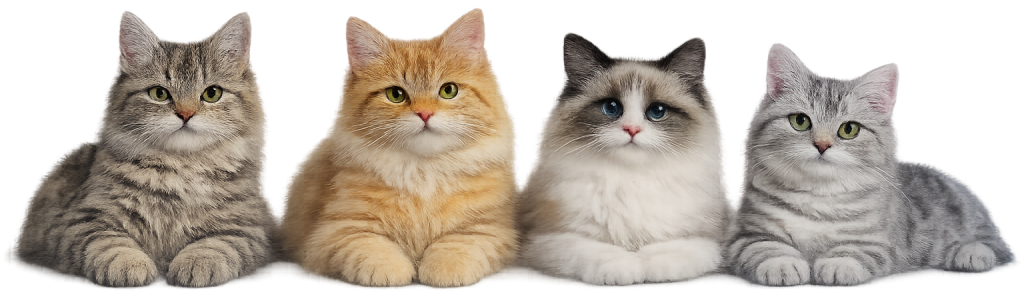
Ragdolls have a reputation for being calm, affectionate cats that enjoy relaxing near their families. However, their laid-back personality does not mean exercise is optional. Understanding Ragdoll cat exercise needs helps owners support healthy weight, strong muscles, mental stimulation, and better overall well-being. These large cats may not race around the house all day, yet they still benefit from regular opportunities to chase, climb, explore, and play. The key is finding activities that suit their moderate energy level without forcing exercise. Short interactive sessions, interesting toys, climbing areas, and a stimulating indoor environment can provide plenty of movement. With a consistent routine, exercise can become an enjoyable part of everyday life for both you and your Ragdoll.
Ragdolls are generally considered moderately active cats. Many enjoy bursts of playful energy followed by long periods of rest. Therefore, owners should not compare their activity level with highly energetic breeds that constantly climb, run, or demand entertainment.
Individual personality also matters. One Ragdoll may enthusiastically chase a wand toy several times each day. Another may prefer slower games that involve stalking before a short burst of movement. Age, weight, health, and previous experiences can also affect activity.
Rather than measuring success only by minutes of exercise, watch how your cat behaves. Healthy activity should involve voluntary movement, curiosity, and engagement. Your cat should have opportunities to walk, stretch, climb, chase, and use natural feline behaviors throughout the day.
Regular movement becomes especially important because Ragdolls can grow into large cats. Their size does not automatically mean they are overweight. However, excess body fat can put unnecessary strain on joints and make movement more difficult.
Meeting Ragdoll cat exercise needs can support weight management when combined with appropriate nutrition. Exercise also provides mental stimulation, which can reduce boredom in indoor environments.
How Much Daily Activity Does a Ragdoll Need?
There is no single exercise duration that works perfectly for every Ragdoll. Instead, several short play sessions spread throughout the day can provide a practical starting point.
For example, many healthy adult cats may enjoy two or three interactive sessions lasting around 10 to 15 minutes. Some Ragdolls will want more, while others prefer shorter sessions. Pay attention to enthusiasm rather than forcing your cat to continue.
Kittens usually have more energy. They may play repeatedly throughout the day and require more opportunities to explore. However, kitten exercise should remain self-directed and playful rather than structured like a human workout.
Adult Ragdoll cat exercise needs often become easier to predict once a daily routine develops. Your cat may become active at certain times, especially early in the morning or evening. Scheduling play during these naturally energetic periods can increase participation.
Senior Ragdolls may slow down. Nevertheless, gentle movement remains valuable unless a veterinarian recommends restrictions. Shorter play sessions, easy-to-reach toys, and lower climbing surfaces can help older cats remain active comfortably.
Health conditions can change activity requirements. Arthritis, heart disease, breathing problems, injuries, obesity, and other medical issues may affect how much exercise is appropriate. Therefore, consult your veterinarian if your cat struggles with normal movement.
Never force a tired or uncomfortable cat to continue playing. Open-mouth breathing, obvious weakness, limping, or unusual difficulty moving should not be ignored. Stop the activity and seek veterinary guidance when necessary.
Play should feel rewarding. Cats naturally perform short bursts of activity rather than long endurance workouts. As a result, a focused ten-minute hunting game may provide more useful stimulation than leaving random toys on the floor all day.
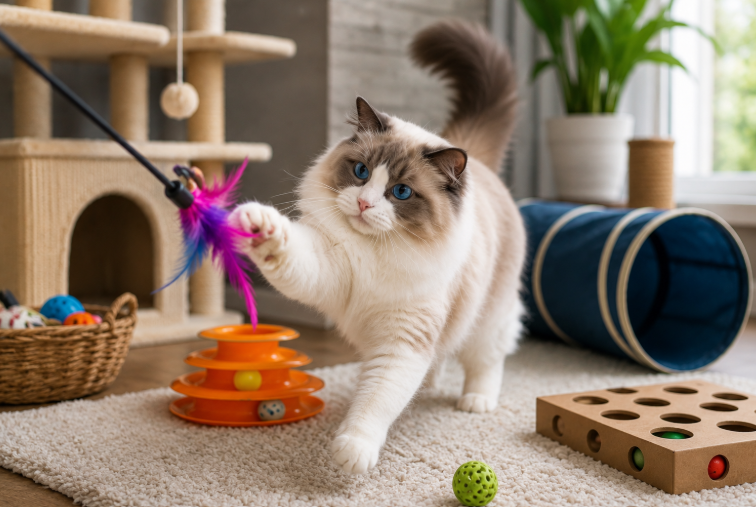
Interactive play is particularly effective because you control the movement of the toy. A wand toy can imitate prey by hiding, pausing, darting, and changing direction. This encourages stalking and pouncing instead of simply waving an object directly in front of your cat.
Allow your Ragdoll to catch the toy occasionally. Constantly preventing success can make the game frustrating. A satisfying play sequence should provide opportunities to stalk, chase, capture, and then relax.
Meeting Ragdoll cat exercise needs also requires variety. Cats can lose interest when the same toy moves in exactly the same way every day. Rotate toys and change play patterns to keep sessions interesting.
You do not need dozens of expensive products. A few safe toys used creatively can provide plenty of entertainment. Store some toys away and bring them back later so they feel more novel.
Choose Activities That Encourage Natural Movement
The best exercises usually resemble behaviors cats already enjoy. Hunting-style games are an excellent example. Wand toys encourage stalking, running, turning, jumping, and pouncing while also providing mental stimulation.
Small lightweight toys can encourage independent play. Some Ragdolls enjoy batting balls across the floor or carrying soft toys around the home. Others prefer toys that roll unpredictably.
Tunnels can add another layer of movement. Your cat may run through them, hide inside, or use them during interactive games. You can move a wand toy around the tunnel entrances to encourage stalking.
Climbing also contributes to Ragdoll cat exercise needs. A sturdy cat tree gives your cat opportunities to climb, stretch, and move between different heights. Because Ragdolls can become large, stability matters more than impressive height.
Choose furniture with a strong base and platforms large enough for your cat. A lightweight structure that wobbles may discourage use or create a safety risk.
Window perches can motivate movement as well. A cat may repeatedly climb onto a favorite perch to observe birds, people, and outdoor activity. Although watching is not intense exercise, reaching different observation areas adds movement to the day.
Scratching provides physical activity too. Tall scratching posts allow cats to stretch their backs, shoulders, and legs. Horizontal scratchers offer another position and may appeal to cats with different preferences.
Food puzzles can combine mental and physical activity. Instead of receiving every piece of food from a bowl, your cat may need to push, roll, or manipulate a puzzle. Start with an easy design so the activity remains rewarding.
You can also encourage movement by placing useful resources in different appropriate areas. For example, beds, scratching posts, and climbing spaces can encourage your Ragdoll to move naturally around the home.
However, never make essential resources difficult to reach. Food, water, and litter boxes should remain accessible, especially for kittens, senior cats, and cats with mobility problems.
Some Ragdolls enjoy learning simple behaviors through positive reinforcement. Target training, stepping onto a platform, entering a carrier, or following a target can provide gentle activity and mental stimulation.
Training sessions should remain short and positive. Small rewards can motivate participation, but account for treat calories within the daily diet.
This balance helps meet Ragdoll cat exercise needs without turning activity into a stressful obligation. Exercise should fit naturally into your cat’s environment and normal behavior.
Household members can participate too. Children may enjoy supervised wand-toy sessions, while adults can introduce puzzle activities or training. Everyone should understand that hands and feet are not appropriate toys.
Using body parts as moving targets can encourage biting and grabbing. Instead, provide suitable toys that create distance between your skin and your cat’s claws.
Prevent Boredom and Support a Healthy Weight
Exercise and mental enrichment often work together. A cat may become physically inactive because its environment offers little reason to move. Therefore, improving the home can be just as important as scheduling play sessions.
Indoor Ragdolls need opportunities to make choices. They should have places to climb, hide, scratch, observe, sleep, and play. A richer environment encourages natural behavior throughout the day.
Rotation is useful. Instead of leaving every toy available permanently, keep several stored away. Change the selection regularly so familiar toys become interesting again.
Cardboard boxes can provide inexpensive enrichment. Many cats enjoy jumping into them, hiding, or investigating different openings. Always remove staples, loose tape, and other hazards before offering a box.
You can also change where play happens. One day, move a toy around the living room. Another day, use a hallway or play around a cat tunnel. Small environmental changes can create new challenges.
Meeting Ragdoll cat exercise needs becomes particularly important for weight control. Because the breed is naturally substantial, owners may have difficulty judging healthy body condition based on weight alone.
Your veterinarian can assess body condition and determine whether your cat needs to lose, gain, or maintain weight. This assessment is more useful than comparing your Ragdoll with another cat online.
Nutrition and exercise should work together. Increasing activity cannot compensate for consistent overfeeding. Likewise, severely restricting food without veterinary guidance can create health risks.
Measure meals when portion control is necessary. Treats should form only a limited part of the overall diet. If several family members offer treats, keep track so the total does not quietly become excessive.
Regular play can also strengthen the relationship between you and your Ragdoll. Interactive games provide attention while allowing the cat to express natural hunting behavior.
This can be especially helpful in busy households. A focused ten-minute session may provide more meaningful interaction than simply being in the same room for several hours.
However, rest remains important. Adult cats naturally sleep for large portions of the day. A sleeping Ragdoll does not automatically need to be awakened for exercise.
Instead, notice when your cat naturally becomes alert. Signs of play interest may include following movement, watching toys closely, running through the home, or approaching familiar play areas.
Use those moments to meet Ragdoll cat exercise needs without disrupting healthy rest. A routine based on your cat’s natural rhythm is easier to maintain.
If activity suddenly decreases, consider whether something has changed. Hot weather, stress, aging, weight gain, or illness can influence energy levels. A dramatic or persistent reduction deserves closer attention.
Pain is particularly important because cats often hide discomfort. Hesitating before jumping, using stairs differently, sleeping more, or avoiding favorite climbing areas may indicate a mobility problem.
Do not simply assume your Ragdoll has become lazy. A veterinary examination can help identify medical reasons for reduced activity.
Adjust Exercise Throughout Your Ragdoll’s Life
Exercise routines should change as your cat ages. Kittens need frequent opportunities to play and explore, but their activity should remain safe and appropriate for developing bodies.
Kitten-proof the environment carefully. Secure unstable furniture, remove dangerous strings, protect electrical cords, and prevent access to unsafe heights or small objects that could be swallowed.
Young cats often entertain themselves, yet interactive play still matters. It helps direct their energy toward appropriate toys and builds positive relationships with people.
Adult Ragdoll cat exercise needs generally focus on maintaining muscle, healthy body condition, mobility, and mental engagement. This stage is a good time to establish routines that can continue for years.
Middle-aged cats may gradually become less active. Owners sometimes miss this change because it happens slowly. Continue offering play instead of assuming your cat no longer enjoys it.
Adjust the style if necessary. A cat that once jumped high for a wand toy may prefer chasing it across the floor. The activity can still provide valuable movement.
Senior Ragdolls may benefit from gentle, frequent sessions rather than intense play. Low platforms, ramps, accessible beds, and easy-entry litter boxes can support mobility.
Warm, comfortable resting areas may also help older cats. However, comfort should not mean complete inactivity. Appropriate movement can remain part of a healthy senior routine when your veterinarian approves it.
Watch your cat’s response after activity. A healthy cat should recover normally. Persistent limping, stiffness, weakness, or unusual breathing requires attention.
Owners should also consider changes in vision or hearing. Older cats may respond better to toys that rely on movement, texture, scent, or sound depending on their abilities.
The aim is to adapt Ragdoll cat exercise needs to the individual rather than following a rigid plan. A healthy routine should evolve with age, health, confidence, and physical ability.
Consistency remains more important than intensity. Several enjoyable play sessions each day can provide meaningful activity without overwhelming a calm cat.
You can make exercise easier to remember by connecting it with existing routines. Play before breakfast, after work, or before an evening meal. Predictable timing may also encourage your Ragdoll to participate.
Keep experimenting when a toy loses its appeal. Sometimes changing the movement is enough. A wand dragged slowly behind furniture may suddenly become more interesting than one waved rapidly in the air.
Most importantly, allow your cat to choose whether to participate. Encouraging movement is healthy, but chasing or forcing a reluctant cat creates stress.
Understanding Ragdoll cat exercise needs means recognizing that exercise is more than running. Climbing, stalking, scratching, exploring, training, and manipulating food puzzles all provide useful activity.
A balanced routine combines physical movement with mental stimulation and plenty of rest. It also considers nutrition, weight, health, and the cat’s environment.
Ragdolls may be famous for their relaxed personalities, yet they still need opportunities to move every day. Fortunately, meeting those needs can be simple. A sturdy cat tree, several safe toys, short interactive sessions, and an interesting home environment provide a strong foundation.
When you consistently support Ragdoll cat exercise needs, you help protect more than your cat’s waistline. Regular activity supports mobility, mental engagement, natural behavior, and your relationship with your pet. Keep exercise positive, adjust it as your Ragdoll ages, and pay attention to changes in movement. That approach gives your cat the best chance to remain active, comfortable, and engaged throughout life.
FAQ
1. How Much Should a Ragdoll Cat Play Each Day?
Many healthy adult Ragdolls enjoy several short play sessions throughout the day. Around 10 to 15 minutes per session can be a practical starting point. However, age, health, personality, and fitness should guide the routine.
2. What Are the Best Exercises for a Ragdoll?
Interactive wand games, climbing, chasing lightweight toys, scratching, puzzle feeders, and simple training can all encourage movement. Choose activities your individual cat genuinely enjoys.
3. Are Ragdolls Less Active Than Other Cats?
Many Ragdolls have moderate activity levels and may appear calmer than highly energetic breeds. However, individual personalities vary. Even relaxed cats need daily opportunities for movement and mental stimulation.
4. How Can I Encourage an Overweight Ragdoll to Move More?
Begin with short, gentle play sessions and activities that require only small amounts of movement. Also discuss body condition, diet, and an appropriate weight-loss plan with your veterinarian.
5. Do Senior Ragdolls Still Need Daily Exercise?
Yes, many older cats benefit from appropriate gentle activity. However, Ragdoll cat exercise needs change with age and health. Lower climbing areas, slower games, and shorter sessions may make movement more comfortable.