Ragdolls may be famous for their relaxed personalities, but that does not mean they spend every hour sleeping. Ragdoll cat playfulness often appears as gentle bursts of chasing, stalking, climbing, and interactive games with people. Many Ragdolls enjoy play without displaying the nonstop energy associated with some highly active breeds. They might chase a feather toy enthusiastically for several minutes, then settle beside you for a long nap. However, every cat has an individual personality, so activity levels can vary. Age, health, environment, weight, and social experiences can also influence how often a Ragdoll wants to play. Understanding these patterns helps owners provide enough stimulation without expecting their cat to behave like an endless source of energy.
A Ragdoll’s calm reputation can sometimes cause owners to underestimate the importance of play. Although these cats may enjoy lounging, they still have natural feline instincts. They want opportunities to stalk, chase, pounce, scratch, climb, and investigate their surroundings.
Play gives them safe ways to express those behaviors indoors. In addition, regular activity supports healthy movement and helps prevent boredom. Interactive games can also strengthen the relationship between a Ragdoll and its family.
Many Ragdolls seem particularly interested in games involving their owners. A toy sitting motionless on the floor may receive little attention. However, the same toy can become fascinating once someone makes it move like prey.
This social element is an important feature of Ragdoll cat playfulness. Instead of simply providing a basket full of toys, owners should participate regularly. Even short sessions can make everyday life more interesting.
What Playful Ragdoll Behavior Looks Like
Play can look different from one Ragdoll to another. Some cats chase toys across the room, while others prefer to crouch quietly before making one carefully timed pounce. Both behaviors can represent healthy play.
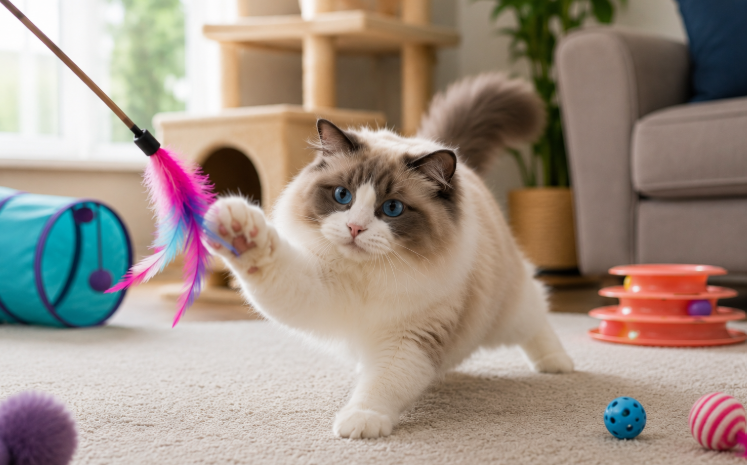
Hunting-style games are particularly natural. Your Ragdoll may stare intensely at a moving feather, lower its body, wiggle its hindquarters, and suddenly leap forward. This sequence reflects behaviors related to feline hunting instincts.
A playful cat may also hide behind furniture and wait for a toy to pass. Others enjoy chasing lightweight balls or carrying soft toys around the home. Some Ragdolls even initiate games by bringing a favorite object toward their owners.
Short bursts of running are another normal expression of Ragdoll cat playfulness. Your cat may suddenly race down a hallway or sprint between rooms. These energetic moments are sometimes called zoomies and can happen after resting or using the litter box.
Climbing can become part of play too. A sturdy cat tree gives a Ragdoll opportunities to move vertically, survey the room, and incorporate different heights into games. Because adults can become large, choose stable furniture with spacious platforms.
Scratching is another normal feline behavior that can occur around playful periods. Tall scratching posts allow cats to stretch while using their claws. Horizontal scratching surfaces provide another option.
Owners should distinguish playful behavior from aggression. During healthy play, the cat’s movements may look dramatic, but the overall interaction remains flexible. The cat may pause, change activities, or return willingly to the game.
Overstimulation can happen, though. Rapid tail movement, flattened ears, growling, skin twitching, or increasingly rough biting may signal that the cat needs a break. Stop the interaction before excitement turns into frustration.
Avoid using hands and feet as toys. A kitten grabbing fingers may seem harmless, but the same behavior can become painful when the cat grows. Instead, use toys that provide appropriate distance between your body and the cat’s claws or teeth.
Wand toys work particularly well because they allow you to imitate prey movement. Move the toy away from the cat rather than constantly pushing it toward the face. Real prey usually tries to escape, so movement away can make the game more engaging.
Allow your cat to catch the toy regularly. Successful captures help complete the play sequence. Constantly preventing your Ragdoll from reaching the target may eventually create frustration.
Several short sessions throughout the day can support Ragdoll cat playfulness better than one very long session. Many cats naturally prefer intense activity in brief periods followed by rest.
Morning and evening may be especially productive times for interactive play. Cats often become more active around dawn and dusk. However, your individual Ragdoll may develop a different household routine.
Pay attention to when your cat naturally becomes interested in activity. If it regularly approaches the toy basket after dinner, that can become an ideal time for a short game.
How Playfulness Changes With Age
Age has a major influence on Ragdoll cat playfulness. Kittens usually have abundant curiosity and may turn almost anything into a game. They chase, climb, explore, wrestle, and investigate unfamiliar objects as they learn about their surroundings.
Because kittens are still developing, the home needs careful safety preparation. Secure unstable furniture, protect electrical cords, remove small objects that could be swallowed, and keep dangerous strings out of reach.
Kittens may play repeatedly throughout the day. However, they also need plenty of sleep. Allow them to rest rather than constantly waking them for entertainment.
Play helps young cats practice coordination and learn appropriate social behavior. Therefore, provide safe toys and positive interactions. Avoid encouraging biting or scratching directed toward human hands.
As Ragdolls reach adulthood, their activity often becomes more predictable. They may still enjoy enthusiastic games, but the endless kitten energy usually becomes less intense.
Adult cats often develop clear preferences. One may love feather toys, while another ignores them and chases balls instead. Some prefer floor-based games, whereas others enjoy climbing.
Experimenting with different activities can reveal what motivates your cat. However, you do not need dozens of expensive toys. The movement and presentation of a toy can matter more than its price.
For example, a familiar wand toy may become interesting again if you drag it slowly behind a box. Likewise, a ball can become more exciting when rolled down a hallway instead of simply left beside the food bowl.
Middle-aged cats may gradually become calmer. Still, owners should continue encouraging Ragdoll cat playfulness because regular movement supports healthy body condition and mental engagement.
A sudden loss of interest is different from gradual aging. If a normally playful cat unexpectedly stops participating, consider whether pain, illness, stress, or another change could be responsible.
Senior Ragdolls can remain playful too. However, their games may become slower and shorter. A senior cat might prefer batting a toy from a comfortable position rather than jumping into the air.
Lower climbing structures can make play easier for older cats. Ramps, steps, and accessible resting areas may also support movement when joints become less flexible.
Never assume an older cat has become lazy. Arthritis and other medical problems can make movement uncomfortable. Signs may include hesitating before jumping, avoiding stairs, grooming less, or sleeping in different places.
Veterinary care becomes important when activity changes significantly. Addressing discomfort may help a senior cat become interested in gentle play again.
Best Ways to Encourage Healthy Play
Variety can keep Ragdoll cat playfulness interesting without making the home cluttered. Instead of leaving every toy available permanently, rotate a small selection. Store the others safely and reintroduce them later.
Interactive wand toys can encourage stalking and chasing. Lightweight balls promote running and batting. Soft toys may appeal to cats that enjoy carrying or kicking objects.
Tunnels provide hiding places and can become part of chasing games. Move a wand toy near the entrance and let your Ragdoll wait inside before pouncing.
Cardboard boxes can provide inexpensive enrichment as well. Cats may jump inside, hide behind them, or investigate openings. Remove staples, loose tape, or damaged pieces before offering a box.
Puzzle feeders add mental stimulation to the day. Rather than receiving food without effort, a cat must manipulate the puzzle to access part of its meal. Start with an easy option and gradually increase difficulty.
Training can become another form of play. Some Ragdolls can learn to touch a target, step onto a platform, enter a carrier, or perform other simple behaviors through positive reinforcement.
Keep training sessions brief. A few successful repetitions are usually better than continuing until the cat loses interest. If you use treats, include those calories within the daily diet.
A window perch can provide passive enrichment between active sessions. Watching birds, insects, people, or moving leaves can hold a cat’s attention for long periods.
However, observe your cat’s reaction. Outdoor animals may excite some cats but frustrate others. If your Ragdoll becomes agitated at the window, changing the view may help.
Another way to encourage Ragdoll cat playfulness is to create opportunities throughout the home. A scratching post in one room, a cat tree in another, and toys in a third area can encourage natural movement.
Still, essential resources should remain easy to reach. Never make food, water, or litter access difficult simply to encourage exercise.
Families can participate together. Children can enjoy appropriate interactive games when adults supervise. Teaching children to use toys instead of hands creates safer habits for everyone.
Allow the cat to walk away whenever it wants. Forced play is no longer play. A Ragdoll that loses interest should be free to rest or choose another activity.
Balancing Play, Weight, and Mental Stimulation
Regular activity can support healthy weight, which makes Ragdoll cat playfulness important beyond simple entertainment. Ragdolls are naturally large cats, but large body size should not be confused with excess body fat.
Your veterinarian can evaluate body condition and help determine an appropriate weight range. This is more useful than comparing your cat with photographs or breed averages online.
Nutrition remains equally important. Exercise cannot fully compensate for chronic overfeeding. Measure meals when necessary and account for treats used during play or training.
Food puzzles can help combine movement with feeding. However, they should remain manageable. A puzzle that is too difficult may cause frustration rather than useful enrichment.
Mental stimulation also helps indoor cats stay engaged. Without interesting activities, some cats may spend most of their waking hours waiting for food or attention.
Changing the environment slightly can create novelty. Move a tunnel, introduce a clean cardboard box, or rotate a familiar toy. Small changes can encourage investigation without overwhelming a cautious cat.
You can also hide a few appropriate treats or pieces of food in safe, accessible places. Searching encourages exploration. However, avoid hiding food where it may be forgotten or attract pests.
Social interaction remains valuable too. Many Ragdolls enjoy being near their families, so play can become part of everyday bonding. A ten-minute game after work may provide both physical activity and focused attention.
At the same time, encourage independent entertainment. A healthy cat should have options when nobody is available to play. Safe toys, scratching areas, climbing furniture, and observation spaces can help.
If Ragdoll cat playfulness suddenly becomes excessive or unusually intense, consider whether the environment has changed. A cat that lacks stimulation may become especially demanding when someone finally arrives home.
Adding predictable play sessions can help create structure. Your Ragdoll may learn that enjoyable activity happens at regular points during the day.
On the other hand, a sudden decrease in play can deserve more attention. Reduced activity may result from stress, pain, illness, obesity, or changes in the home.
Watch for additional signs such as appetite changes, hiding, limping, unusual vocalization, or altered litter box habits. These changes can provide important clues.
Create a Play Routine Your Ragdoll Will Enjoy
A successful play routine does not need to be complicated. Start with several short opportunities each day and observe which activities attract your cat.
You might use a wand toy before breakfast, offer independent toys during the afternoon, and schedule another interactive game in the evening. Adjust the routine according to your household and your cat’s preferences.
Consistency can encourage Ragdoll cat playfulness because your cat learns when interactive activity usually happens. Some Ragdolls may even wait near a toy cabinet when they expect a game.
However, keep the experience flexible. Cats do not follow exercise plans like people. One day your Ragdoll may play enthusiastically for fifteen minutes. On another day, five minutes may be enough.
Weather and household activity can influence energy. Likewise, a stressful event may temporarily change play behavior. Look for longer patterns rather than judging your cat based on one quiet afternoon.
Safe play should always remain the priority. Put away string, ribbon, feathers, or small toy parts when they could be swallowed. Inspect toys regularly and replace damaged items.
Laser pointers require extra care because the cat cannot physically capture the light. If you use one, finish the game with a toy or treat the cat can actually catch. This provides a more satisfying ending.
Avoid making your Ragdoll jump repeatedly from unsafe heights. Large cats can place considerable force on their joints when landing. Floor-based chasing and sturdy climbing structures provide plenty of movement.
Ultimately, Ragdoll cat playfulness tends to combine gentle curiosity with short periods of energetic activity. These cats may not spend the entire day racing around, yet many remain enthusiastic players throughout adulthood.
Owners can support that natural behavior through interactive games, safe climbing, puzzle activities, training, and environmental enrichment. The best routine responds to the individual cat rather than relying only on breed expectations.
Pay attention to changes as your Ragdoll ages. Adapt games when mobility changes and seek veterinary guidance if play suddenly declines. A willingness to adjust keeps activity enjoyable instead of demanding.
Most importantly, remember that play is more than exercise. It provides mental stimulation, encourages natural feline behavior, and creates positive interaction between you and your cat.
When you understand Ragdoll cat playfulness, you can appreciate both sides of this popular breed. Ragdolls may love peaceful afternoons on the sofa, but many are equally ready for a well-timed chase across the living room. Give them safe opportunities to stalk, pounce, explore, and succeed, then let them return to relaxing when the game is over.
FAQ
1. Are Ragdoll Cats Naturally Playful?
Yes, many Ragdolls enjoy interactive games and short bursts of energetic activity. However, their individual personalities vary, and some cats are more active than others.
2. What Toys Do Ragdolls Usually Enjoy Most?
Wand toys, lightweight balls, soft toys, tunnels, puzzle feeders, and sturdy climbing furniture can all work well. Try different options and observe what keeps your cat engaged.
3. Do Ragdolls Become Less Playful as They Get Older?
Activity often decreases gradually with age, but many adult and senior Ragdolls still enjoy games. Older cats may prefer slower, shorter activities that require less jumping.
4. How Often Should I Play With My Ragdoll?
Several short sessions spread throughout the day can work well. Follow your cat’s interest and energy rather than forcing a fixed duration.
5. Should I Worry if My Ragdoll Suddenly Stops Playing?
A sudden loss of Ragdoll cat playfulness may deserve attention, especially when combined with appetite changes, hiding, limping, or unusual behavior. A veterinarian can help rule out pain or illness.