Ragdolls often enjoy being close to their families, which can make changes in daily routines especially noticeable. Ragdoll cat separation anxiety may appear when a cat becomes distressed before, during, or after a trusted person’s absence. However, not every clingy Ragdoll has anxiety. Some simply prefer company and follow people around the home because they are social or curious. The important difference is distress. A cat that rests peacefully while you work in another room is behaving differently from one that cries, stops eating, eliminates outside the litter box, or becomes destructive whenever you leave. By recognizing these patterns early, you can respond calmly and determine whether your cat needs environmental support or professional care.
Although people often associate separation problems with dogs, cats can also show behaviors linked with distress when separated from important social companions. Still, owners should avoid diagnosing the problem from one behavior alone. Excessive vocalization, inappropriate elimination, reduced appetite, and overgrooming can have medical causes. Therefore, a veterinary examination is important when a new or severe behavior appears.
Your Ragdoll’s normal personality provides the best starting point. Some cats greet their owners enthusiastically, sleep beside them, and follow them from room to room. Those behaviors can be completely normal. Concern becomes more reasonable when the behavior changes significantly or consistently appears around departures.
Timing offers useful clues. For example, your cat may become restless when you pick up your keys or put on work clothes. Another Ragdoll may begin crying soon after the front door closes. Some cats appear calm before departure but show problems while alone. Because owners are absent during that period, the connection can be difficult to notice without observation.
Recognizing the Most Important Behavioral Signs
Excessive vocalization is one possible sign of Ragdoll cat separation anxiety. Your cat may meow, cry, or call repeatedly when you prepare to leave. The vocalization may continue after you have gone. However, increased meowing can also happen because of hunger, boredom, discomfort, age-related changes, or medical problems. Context matters more than the sound itself.
Restlessness can also appear before a departure. A distressed cat might pace between rooms, repeatedly approach the door, or struggle to settle. Some cats follow their owners more intensely than usual. Others position themselves near bags, shoes, or doors when they recognize a familiar departure routine.
Destructive behavior deserves attention too. Cats naturally scratch, climb, and explore, so ordinary scratching does not indicate anxiety. However, a sudden pattern of scratching doors, damaging blinds, or disturbing objects near exits may suggest distress. Again, look for a strong connection with your absence.
Eliminating outside the litter box can be another warning sign. A cat may urinate or defecate in unusual places when stressed. Yet litter box changes always deserve careful attention because urinary and digestive conditions can cause similar behavior. Never assume that inappropriate elimination is revenge or deliberate misbehavior.
Changes in appetite may occur with Ragdoll cat separation anxiety as well. A cat that normally enjoys meals might avoid food while alone and eat soon after its owner returns. Other cats may eat less overall during stressful periods. Since appetite loss can become medically important, contact your veterinarian if your cat stops eating or shows a major change.
Overgrooming is another behavior to monitor. Cats naturally spend considerable time cleaning themselves. Stress, however, can contribute to repeated licking that damages the coat or skin. You might notice thinning hair on the belly, legs, or sides. Before blaming anxiety, a veterinarian should rule out allergies, parasites, pain, and skin disease.
Some cats show the opposite response and groom less. Their coat may look less tidy, especially if stress affects normal routines. Changes in grooming are useful clues because owners who regularly brush their Ragdolls often notice coat differences quickly.
Physical signs may appear alongside behavioral changes. Stress can contribute to digestive upset in some cats. Vomiting or diarrhea should never automatically be labeled as anxiety, though. Medical causes must remain part of the evaluation.
Your cat’s behavior after you return can provide additional information. A Ragdoll may greet you immediately and seek affection. That alone is normal. However, intense agitation, prolonged vocalization, frantic attention seeking, or difficulty settling may add to a larger pattern of Ragdoll cat separation anxiety.
Video can help reveal what happens while nobody is home. A simple indoor camera may show whether your cat sleeps comfortably or spends long periods pacing and calling. It can also reveal when the behavior begins and how long it lasts.
If you use a camera, focus on patterns rather than isolated moments. A few minutes of meowing after departure may not indicate a serious problem. In contrast, repeated distress throughout many absences deserves more attention.
Keep a simple behavior diary for one or two weeks. Record when you leave, how long you are gone, and what you observe before and after. If you have a camera, note what happens during the absence. This record can help your veterinarian understand the situation more clearly.
Why a Ragdoll May Struggle With Being Alone
There is rarely one universal cause of Ragdoll cat separation anxiety. Instead, several factors may influence how well a cat handles separation. Individual temperament matters, as does the cat’s history and environment.
A sudden routine change can create difficulty. For example, someone who previously worked from home may begin spending full days away. School schedules, new jobs, travel, and household changes can also alter how much companionship a cat receives.
Changes within the family may matter too. A person moving away, a new baby, a new pet, or the loss of another animal can affect familiar social patterns. Cats often depend on predictable routines, even when they appear independent.
Moving to a new home can add another layer of stress. Your Ragdoll must adjust to unfamiliar smells, sounds, rooms, and routines. If longer absences begin at the same time, the combined changes may make adjustment harder.
Boredom can sometimes resemble Ragdoll cat separation anxiety. A cat without enough play, climbing space, scratching options, or mental stimulation may become vocal or destructive while alone. Therefore, improving the environment is an important part of evaluating the problem.
The distinction is useful because boredom and separation-related distress may require different approaches. A bored cat might readily engage with toys or food puzzles after you leave. A severely distressed cat may ignore those activities because its emotional state prevents normal engagement.
Past experiences may also influence behavior. Cats that have experienced repeated changes in caregivers or living situations may react differently to departures. However, history does not guarantee that anxiety will develop. Each cat responds differently.
Age can change behavior as well. Kittens may have high social and play needs, while senior cats can experience health or cognitive changes that alter their responses to being alone. Consequently, sudden behavioral changes in older cats should receive veterinary attention.
Owners sometimes unintentionally reinforce demanding behavior. For instance, immediately responding to every vocalization can teach a cat that calling brings attention. However, true distress should not be treated as simple attention seeking. Understanding the emotional state behind the behavior is essential.
For that reason, punishment is inappropriate for Ragdoll cat separation anxiety. Scolding, spraying water, or frightening a cat can increase stress. It also fails to teach the cat how to feel safe when alone.
Instead, the goal is to make departures predictable and manageable. Your cat should gradually learn that being alone is safe and that people return. This process may take time, especially when distress has become established.
Helping Your Ragdoll Feel Safer During Absences
A predictable daily routine can help manage Ragdoll cat separation anxiety. Try to keep feeding, play, grooming, and rest periods reasonably consistent. Exact timing is not always necessary, but familiar patterns can give your cat useful structure.
Interactive play is particularly valuable. Schedule an active play session before a longer absence when possible. Wand toys and other safe interactive toys can encourage stalking, chasing, and pouncing. Afterward, a meal may help your cat transition into a calmer period.
Make the home interesting while you are away. Window perches, cat trees, scratching surfaces, hiding places, and comfortable elevated beds offer choices. Rotate safe toys rather than leaving every toy available all the time. Rotation can help maintain novelty.
Food puzzles can provide mental stimulation for suitable cats. Start with an easy puzzle while you are home so your Ragdoll understands how it works. Gradually introduce more challenging options if your cat enjoys them.
Avoid making departures highly emotional. Long goodbyes can become another signal that something unusual is about to happen. Instead, keep leaving calm and routine. Likewise, return home normally and allow your cat to approach at its own pace.
For mild Ragdoll cat separation anxiety, practicing short absences may help. Begin with a period your cat can comfortably tolerate. Then, gradually increase the duration. Progress should remain slow enough that your cat does not repeatedly reach a high level of distress.
Departure cues can also become triggers. Picking up keys, putting on shoes, or carrying a work bag may predict a long absence. You can sometimes weaken these associations by performing the cues without leaving. For example, pick up your keys and then sit down to read.
However, gradual training must match the severity of the problem. If your cat panics almost immediately, professional guidance can make the process safer and more effective. A veterinarian or qualified feline behavior professional can help create an appropriate plan.
Environmental enrichment should continue even after symptoms improve. A stimulating home supports normal feline behavior and gives your Ragdoll healthy ways to spend time independently.
Some owners consider getting another cat as a solution. While companionship can benefit certain cats, a second pet is not a guaranteed treatment for Ragdoll cat separation anxiety. The distressed cat may specifically miss a person rather than feline company. In addition, introducing another animal can create more stress if the cats are poorly matched.
Instead, base the decision to add another pet on whether you genuinely want and can care for another animal. Do not rely on a new cat as an automatic behavioral cure.
Comfortable resting areas can also make a difference. Ragdolls often enjoy soft beds and elevated places where they can observe their surroundings. Provide several options in quiet areas and near familiar household activity.
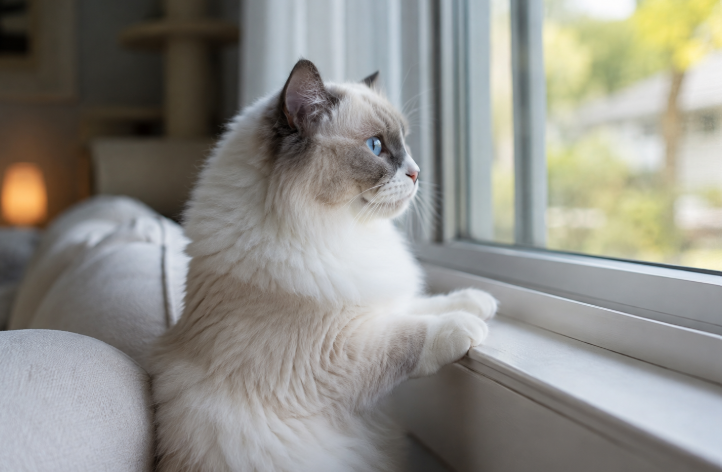
Safe access to windows can provide visual stimulation. However, outdoor animals can frustrate or frighten some indoor cats. Watch your cat’s reaction and block the view if outside activity increases agitation.
When Professional Help Becomes Important
Persistent Ragdoll cat separation anxiety should not simply be ignored. If distress interferes with eating, elimination, grooming, sleep, or normal behavior, contact your veterinarian. Professional assessment becomes especially important when symptoms begin suddenly.
Your veterinarian can first look for medical conditions that mimic anxiety. Pain, urinary disease, digestive problems, skin conditions, endocrine disorders, and other illnesses may cause behavioral changes. Treating the underlying medical problem may resolve or reduce the symptoms.
Bring your behavior diary and relevant video clips to the appointment. These details can help show exactly what happens around departures. They may also reveal patterns that are difficult to describe from memory.
If medical causes are ruled out, your veterinarian may recommend a behavior plan or referral to a qualified professional. Treatment often combines environmental management with gradual behavior modification.
In more serious cases, a veterinarian may discuss medication as part of a broader treatment plan. Medication should never replace environmental improvements or behavioral work. However, it may help some cats reach an emotional state where learning becomes easier.
Never give your cat human anxiety medication or sedatives without veterinary instructions. Cats process medications differently from people, and some substances can be dangerous.
Improvement may not happen in a straight line. Your cat could handle several departures well and then struggle after a schedule change. Rather than viewing that as failure, adjust the plan and return to an easier stage.
Managing Ragdoll cat separation anxiety requires patience because the goal is emotional security, not simply stopping an unwanted behavior. A quiet cat is not necessarily a comfortable cat. Instead, look for normal eating, resting, grooming, play, and exploration while you are away.
Over time, many cats can become more comfortable with predictable periods alone. Regular enrichment, calm departures, gradual training, and appropriate veterinary support create a strong foundation.
Most importantly, pay attention to your individual Ragdoll rather than relying on breed stereotypes. Ragdolls often have affectionate personalities, but each cat has different social needs and coping skills. Knowing your cat’s normal behavior makes meaningful changes easier to recognize.
When you understand Ragdoll cat separation anxiety, you can respond to warning signs without panic or punishment. Observe the timing of symptoms, rule out medical problems, improve the home environment, and introduce independence gradually. With consistent support, you can help your Ragdoll feel secure even when you cannot be beside them.
FAQ
1. How Can I Tell if My Ragdoll Misses Me or Feels Truly Anxious?
A cat that simply misses you may greet you enthusiastically but otherwise eat, sleep, play, and use the litter box normally. Anxiety becomes more concerning when separation consistently causes significant distress or changes in normal behavior.
2. Is It Normal for a Ragdoll to Follow Its Owner Everywhere?
Yes, many Ragdolls enjoy staying near familiar people. Following you around does not automatically indicate a behavioral problem. Look for distress during actual separation rather than affection while you are home.
3. How Long Can a Ragdoll Cat Comfortably Stay Alone?
There is no single limit that suits every cat. Age, health, personality, feeding needs, environment, and previous experiences all matter. Cats should always have reliable access to fresh water, food as appropriate, clean litter facilities, and a safe environment.
4. Can Another Cat Help With Separation Problems?
Sometimes companionship helps, but another cat is not a guaranteed solution. Some cats specifically become distressed by separation from a particular person. A poorly matched new pet may also increase stress.
5. When Should I Contact a Veterinarian About Separation Behavior?
Seek veterinary advice when behavior changes suddenly or affects eating, grooming, elimination, or general well-being. Medical problems can resemble Ragdoll cat separation anxiety, so ruling them out is an important first step.