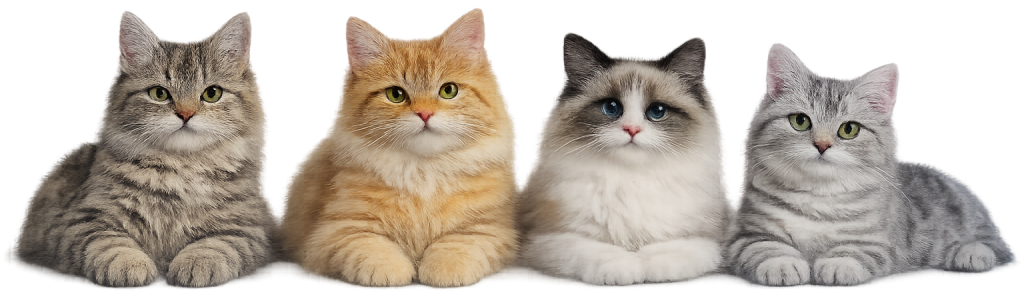
Ragdolls have beautiful coats, gentle personalities, and a reputation for being wonderful companions, but allergy sufferers need to look beyond their fluffy appearance before bringing one home. Ragdoll cats for allergies are sometimes described as a potentially easier choice because their coats lack a dense undercoat compared with some breeds. However, Ragdolls are not considered truly hypoallergenic cats. Cat allergies are usually triggered by proteins produced by the animal rather than the length or thickness of its fur. These allergens can spread through saliva, skin particles, and other secretions before collecting on furniture, clothing, carpets, and bedding. Therefore, choosing a Ragdoll does not guarantee that someone with cat allergies will avoid symptoms. Understanding the actual source of allergies and testing your individual response to the breed can help you make a safer, more informed decision.
People commonly assume that cat fur itself causes allergic reactions. In reality, the situation is more complicated.
A major cat allergen is a protein called Fel d 1. Cats produce this protein primarily in their saliva and sebaceous glands. When a cat grooms, allergens can spread onto its coat.
As tiny particles enter the environment, they can become airborne or collect on household surfaces. This explains why even a cat that does not shed heavily can still trigger symptoms.
Consequently, evaluating Ragdoll cats for allergies based only on shedding can create unrealistic expectations.
Some people may experience mild reactions around one individual cat and stronger reactions around another. Allergy sensitivity also varies considerably from person to person.
Why Ragdolls Are Not Truly Hypoallergenic
The word hypoallergenic is often misunderstood. No common cat breed can guarantee that an allergy sufferer will have no reaction.
Ragdolls still produce allergens. Their long, soft coats can also carry saliva, dander, dust, and other particles around the home.
While their coat structure differs from that of some breeds, this does not eliminate the proteins responsible for most cat allergies.
This distinction matters when considering Ragdoll cats for allergies. Lower shedding does not automatically mean lower allergen exposure.
Some Ragdolls may shed less at certain times of year, while others release considerable loose fur. Seasonal changes, health, nutrition, age, and indoor temperature can influence shedding.
Regular grooming removes loose hair before more of it reaches furniture and floors. However, grooming does not make the cat allergen-free.
An allergy sufferer should ideally avoid doing the brushing personally if grooming triggers symptoms. Another household member can handle the task in a well-ventilated area.
After grooming, cleaning the surrounding area may help remove loose fur and particles.
Bathing is sometimes suggested as an allergy solution. However, frequent bathing can create stress and may affect the skin or coat if done unnecessarily.
Ragdolls generally maintain their own coats through grooming, although brushing helps prevent tangles and remove loose hair.
Before changing bathing routines specifically for allergy management, discuss appropriate grooming with a veterinarian.
Individual reactions are another reason broad claims about Ragdoll cats for allergies can be misleading.
Someone who experiences few symptoms around a friend’s Ragdoll may react differently to another cat. Likewise, spending an hour with a cat is different from living with one every day.
Allergens can gradually accumulate throughout a home. Furniture, carpets, curtains, mattresses, and clothing can retain particles even when the cat is elsewhere.
Therefore, prospective owners should think about long-term exposure rather than relying on a single short interaction.
Spend Time With Ragdolls Before Bringing One Home
If you have known cat allergies, spending time around the breed before adoption can provide useful information.
Ideally, interact with adult Ragdolls in an indoor environment rather than simply seeing a kitten briefly.
Stay long enough to notice whether symptoms begin. However, remember that a short visit cannot perfectly predict what will happen after weeks or months of exposure.
If possible, spend time with the specific cat you are considering. Individual animals may affect allergy sufferers differently.
This step can make evaluating Ragdoll cats for allergies more realistic than relying on breed descriptions found online.
Pay attention to symptoms during and after exposure. Reactions can include sneezing, congestion, itchy or watery eyes, coughing, skin irritation, or other symptoms.
People with asthma or a history of serious allergic reactions should be especially cautious. Discussing pet ownership with a qualified healthcare professional before adoption is sensible when allergies are significant.
Do not deliberately expose yourself to a cat if previous reactions have been severe.
A healthcare professional can evaluate your allergy history and may recommend appropriate testing or management strategies.
It is also important to consider everyone living in the home. One family member may tolerate cats comfortably while another experiences significant symptoms.
Adopting first and discovering a severe problem later can create a difficult situation for both the family and the cat.
Ragdolls can form strong attachments to their homes and caregivers. Therefore, evaluating compatibility before adoption is preferable to relying on the possibility of rehoming later.
Families should be particularly careful when considering a Ragdoll for a child with known allergies.
Children may spend considerable time hugging, carrying, and playing with a friendly cat. Close physical contact can increase exposure.
Teach children to wash their hands after handling pets and avoid touching their eyes or face immediately after petting.
Reduce Cat Allergens Throughout the Home
Environmental management can make a substantial difference for some households with mild or manageable allergies.
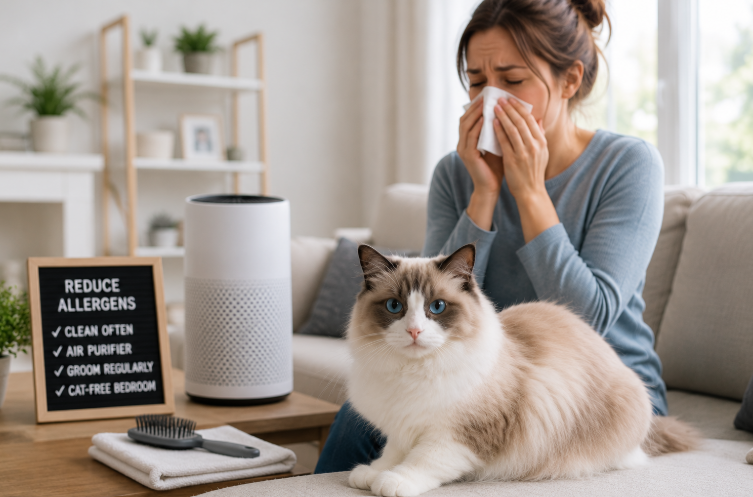
Start by creating at least one cat-free area. The bedroom is often a practical choice because people spend many hours sleeping there.
Keeping the Ragdoll away from pillows, bedding, and mattresses may reduce continuous nighttime exposure.
This boundary needs consistency. Allowing the cat onto the bed occasionally can still introduce allergens into fabrics.
When living with Ragdoll cats for allergies, regular cleaning becomes especially important.
Vacuum carpets, rugs, and upholstered furniture frequently. A vacuum with effective filtration can help prevent captured particles from simply returning to the air.
Hard flooring can be easier to clean than thick carpeting because allergens have fewer fibers in which to accumulate.
Damp dusting may also help capture particles on surfaces rather than sending them back into the air.
Wash blankets, removable furniture covers, and other fabrics regularly. Pay special attention to areas where your Ragdoll sleeps.
Air filtration may provide additional support. A properly sized air purifier with a suitable high-efficiency filter can help reduce airborne particles in frequently used rooms.
However, an air purifier should support regular cleaning rather than replace it.
Ventilation can also help maintain indoor air quality when outdoor conditions make opening windows appropriate.
Wash your hands after extended contact with your Ragdoll. Avoid touching your face immediately after grooming or petting the cat.
Changing clothes may be useful after prolonged close contact for people who react strongly to allergens carried on fabric.
Owners evaluating Ragdoll cats for allergies should also think about furniture choices.
Washable covers can make sofas and chairs easier to maintain. Likewise, minimizing unnecessary fabric surfaces may simplify cleaning.
Cat beds should have removable, washable covers whenever possible.
Keep litter boxes clean as well. Although cat allergies and litter sensitivity are different issues, dusty or strongly scented litter can irritate some people’s airways.
Low-dust litter may create a more comfortable environment. Make changes gradually because cats can be particular about litter texture and scent.
Manage Grooming Without Creating More Exposure
Ragdolls need regular coat maintenance because their medium-to-long fur can develop tangles and mats.
Brushing several times per week may help remove loose hair before it spreads throughout the home.
During heavier shedding periods, some cats may benefit from more frequent grooming.
If the allergy sufferer reacts strongly during brushing, another household member should handle grooming whenever possible.
Choose an area that is easy to clean afterward. Avoid brushing the cat directly beside the allergy sufferer’s bed or frequently used furniture.
This approach does not make Ragdoll cats for allergies hypoallergenic, but it may reduce the amount of loose hair carrying allergens around the home.
Clean grooming tools after use and store them away from bedrooms.
Your Ragdoll’s skin health also matters. Excessive scratching, dandruff, hair loss, or skin irritation deserves veterinary attention.
A healthy coat is easier to maintain, while skin problems may increase visible flakes and shedding.
Feed a nutritionally complete diet appropriate for your cat’s age and health. Good nutrition supports normal skin and coat condition.
Avoid supplements marketed as miracle allergy solutions unless your veterinarian recommends them for a legitimate nutritional or medical reason.
Hydration also supports general feline health. Provide fresh water and discuss diet choices with your veterinarian when needed.
Regular veterinary examinations can help identify skin conditions, parasites, or other health problems that affect grooming and shedding.
Consider the Severity of Your Allergies Before Adoption
Mild allergies and severe allergies create very different pet ownership situations.
Someone who occasionally sneezes around cats may be able to manage exposure through cleaning, boundaries, medical guidance, and household adjustments.
A person with significant asthma or serious reactions may face much greater risks.
For this reason, the question of whether Ragdoll cats for allergies are suitable cannot be answered with a simple yes or no.
Your individual health history matters more than the breed’s reputation.
If you already know that cats trigger significant symptoms, speak with a healthcare professional before adopting.
Allergy testing may help clarify what triggers your symptoms. A clinician can also discuss appropriate strategies based on your specific health needs.
Do not rely entirely on claims from breeders, social media posts, or pet websites stating that a particular Ragdoll line is completely hypoallergenic.
Even if an individual cat appears to produce fewer allergens, there is no guarantee that a sensitive person will remain symptom-free.
Also consider how realistic household management will be.
Keeping the bedroom cat-free sounds simple, but Ragdolls are often social cats that enjoy following family members.
If you know you will eventually allow the cat onto your bed every night, include that likely exposure when evaluating compatibility.
Similarly, regular cleaning requires time and consistency. A busy household may struggle to maintain an intensive cleaning routine.
Long-haired cats also require ongoing grooming regardless of allergies.
A realistic assessment protects both you and the animal.
Can Allergy Sufferers Successfully Live With Ragdolls?
Some allergy sufferers do live successfully with Ragdolls. However, their experiences should not be treated as proof that everyone will have the same result.
Individual sensitivity varies, as does exposure.
One person may comfortably share a home with a Ragdoll after establishing cleaning routines and bedroom boundaries. Another may experience persistent symptoms despite taking similar precautions.
Therefore, Ragdoll cats for allergies should be evaluated individually.
If your allergies are mild, spending time with Ragdolls before adoption can provide a useful starting point.
Consider the specific cat, your household layout, cleaning habits, and willingness to establish cat-free spaces.
If symptoms are moderate or severe, professional medical guidance becomes especially important.
Do not ignore worsening respiratory symptoms simply because you have become emotionally attached to the idea of owning a Ragdoll.
Your health and the cat’s long-term stability both matter.
It is also worth remembering that Ragdolls can live well into their teens with proper care. Adoption is therefore a long-term commitment.
Allergy management that feels manageable for one week needs to remain realistic for many years.
Families should discuss responsibilities before bringing the cat home. Decide who will handle brushing, litter cleaning, vacuuming, and washing cat bedding.
These responsibilities may need to fall primarily on household members without allergies.
Ultimately, Ragdoll cats for allergies are not an allergen-free solution. Their coat may lead some people to assume they are hypoallergenic, but they still produce the proteins responsible for common cat allergies.
The best approach is to test your personal tolerance carefully, seek medical advice when allergies are significant, and create a practical plan for reducing exposure.
Regular cleaning, thoughtful grooming, effective air filtration, handwashing, and cat-free sleeping areas may help some people manage mild reactions.
However, no household strategy can guarantee that symptoms will disappear.
Choosing a pet should balance your desire for companionship with your health and the animal’s need for a stable lifelong home. By approaching the decision realistically rather than relying on the hypoallergenic myth, you can determine whether a Ragdoll is genuinely compatible with your household.
FAQ
1. Are Ragdoll Cats Hypoallergenic?
No. Ragdolls still produce common cat allergens, including Fel d 1. Their coat characteristics do not make them completely safe for people with cat allergies.
2. Do Ragdolls Cause Fewer Allergies Because They Shed Less?
Not necessarily. Shedding can spread allergen-carrying hair, but allergic reactions are mainly caused by proteins produced by the cat rather than fur itself.
3. Should I Spend Time With a Ragdoll Before Adopting One?
Yes. Spending time with the specific cat can help you observe your reaction, although short exposure cannot guarantee how you will respond after living together.
4. How Can I Reduce Cat Allergens in My Home?
Keep bedrooms cat-free, clean floors and furniture regularly, wash cat bedding, use suitable air filtration, wash your hands after contact, and have a non-allergic person handle grooming when possible.
5. Can Someone With Cat Allergies Still Own a Ragdoll?
Some people with mild allergies can manage living with a cat, while others cannot. Ragdoll cats for allergies should be considered based on individual sensitivity, household management, and professional medical advice when symptoms are significant.