Living with a Ragdoll means enjoying a beautiful, silky coat, but it also means dealing with loose hair. Ragdoll cat shedding is a normal part of maintaining a healthy coat, although some cats lose noticeably more fur than others. Seasonal changes, grooming habits, nutrition, stress, age, and health can all affect how much hair you find around your home. Fortunately, controlling excess shedding does not require an exhausting routine. Regular brushing, balanced nutrition, good hydration, and careful attention to skin health can make a major difference. The goal is not to prevent every hair from falling. Instead, you want to support healthy coat renewal while catching loose fur before it reaches your furniture, clothes, and floors.
Ragdolls have semi-long coats that feel soft and plush. Although their coats may have less dense undercoat than some long-haired breeds, they still release dead hair throughout the year. Therefore, finding fur on bedding or your favorite chair does not automatically signal a problem.
Indoor living can also affect normal coat cycles. Heating, air conditioning, and artificial lighting create fairly stable conditions throughout the year. As a result, some indoor Ragdolls appear to shed steadily instead of having only one or two dramatic seasonal periods.
However, every cat has a different baseline. One Ragdoll may leave noticeable fur behind after every cuddle, while another sheds relatively little. Knowing what is normal for your cat makes unusual changes easier to recognize.
Age also influences coat condition. Kittens gradually develop their adult coats, while older cats may struggle to groom hard-to-reach areas. Likewise, overweight cats sometimes have difficulty reaching their backs and hindquarters. Loose hair can then accumulate until owners remove it during grooming.
You should become more concerned when Ragdoll cat shedding suddenly increases without an obvious seasonal reason. Bald patches, red skin, sores, dandruff, excessive scratching, or repeated licking deserve attention. Changes in appetite, weight, energy, or behavior may also suggest that something more than normal coat renewal is happening.
Build a Grooming Routine That Removes Loose Fur
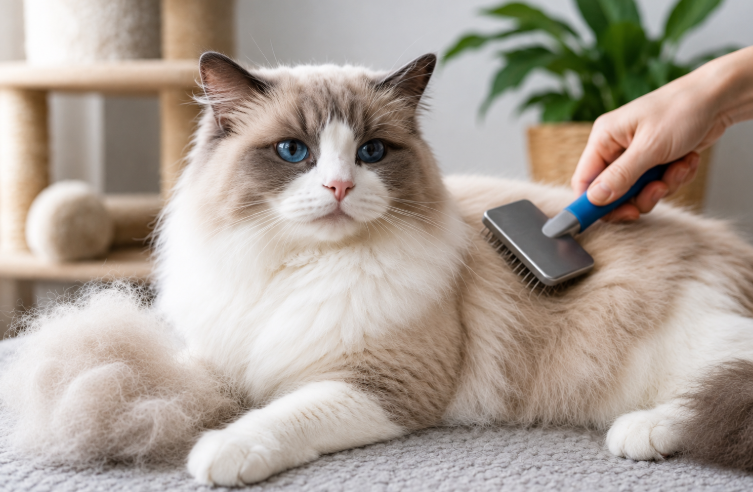
Regular brushing offers one of the simplest ways to manage Ragdoll cat shedding. Instead of allowing dead hair to fall throughout your home, brushing collects much of it in one controlled place. It can also prevent tangles and give you a chance to inspect the skin.
For many Ragdolls, several brushing sessions each week provide a useful starting point. During periods of heavier shedding, you may need to groom your cat more frequently. However, individual coat length and condition should guide your schedule.
You do not need to turn grooming into a long event. In fact, short and calm sessions often work better. Five or ten minutes can remove plenty of loose hair without testing your cat’s patience.
Choose tools that suit a soft, semi-long coat. A wide-toothed metal comb can help you locate small knots and work through the coat. Meanwhile, a suitable slicker or pin brush can collect loose surface hair.
Always use gentle pressure. Aggressive brushing may irritate the skin or pull healthy hairs from the coat. Removing more fur does not necessarily mean you are doing a better job.
Start around areas your cat enjoys having touched, such as the shoulders or back. Then gradually move toward more sensitive areas. The chest, belly, behind the front legs, and hindquarters often need extra attention because friction can create tangles there.
If you encounter a knot, do not yank it. Hold the hair close to the skin to reduce pulling, then gently work from the outer edge of the tangle. Severe mats may require professional assistance because cutting close to feline skin can cause injury.
Consistency makes Ragdoll cat shedding much easier to manage. Waiting until the coat releases large amounts of fur means each grooming session becomes longer. Frequent maintenance catches dead hair earlier and can make grooming more comfortable.
Positive associations also matter. Choose a quiet time when your cat feels relaxed. You can follow grooming with play, affection, or a suitable treat. Over time, your Ragdoll may begin to view brushing as a normal part of the day.
Never force your cat to remain in place when it becomes highly stressed. Instead, stop and try another short session later. Gradually increasing grooming time often produces better results than restraint.
Bathing is another option, although most healthy Ragdolls do not need frequent baths simply to control loose hair. Cats generally maintain their coats through self-grooming. Excessive bathing may also dry or irritate sensitive skin.
If your Ragdoll genuinely needs a bath, use a product made specifically for cats. Rinse the coat thoroughly because shampoo residue can cause irritation. Human shampoo is not suitable for routine feline grooming.
Regular coat care also helps limit swallowed hair. Cats naturally ingest some fur while grooming themselves. Removing loose strands before your cat swallows them may support easier coat maintenance and reduce the amount of hair entering the digestive system.
Still, hairballs can have several contributing factors. Frequent vomiting should not automatically be dismissed as a normal result of having long hair. Contact your veterinarian if vomiting becomes recurrent or your cat seems unwell.
Support Healthy Skin and Coat From Within
Grooming works best when the hair itself grows from healthy skin. Therefore, nutrition plays an important role in managing Ragdoll cat shedding. Cats need complete and balanced diets that provide enough protein, fats, vitamins, and minerals for their life stage.
Hair contains a large amount of protein, and cats have naturally high protein requirements. As obligate carnivores, they rely on nutrients that come from animal-based dietary sources. Feeding an appropriate complete diet helps provide the building blocks needed for normal skin and hair maintenance.
Essential fatty acids also contribute to skin and coat health. However, that does not mean every Ragdoll needs an oil or coat supplement. A complete commercial diet may already provide suitable amounts.
Adding supplements without guidance can create unnecessary calories or nutritional imbalances. Therefore, ask your veterinarian before introducing fish oil, vitamins, minerals, or other concentrated supplements.
Hydration deserves attention as well. Fresh water should always be easy to access. Some cats prefer wide bowls, while others drink more readily from moving water.
Placing water in several locations may encourage drinking, especially in larger homes. Keep bowls clean and refresh the water regularly. In addition, wet cat food can contribute moisture when it forms an appropriate part of the diet.
Weight management can indirectly influence Ragdoll cat shedding because overweight cats may struggle to groom certain areas. If your Ragdoll cannot comfortably reach its back or hindquarters, dead hair and skin debris may build up.
Portion control and daily activity can help maintain a healthy body condition. Your veterinarian can assess weight and recommend an appropriate calorie intake when needed.
Daily play also supports physical and mental health. Wand toys, lightweight balls, tunnels, and other safe toys encourage movement. Moreover, interactive play gives indoor cats an outlet for natural stalking and chasing behavior.
Stress management matters because emotional changes can affect grooming. Some cats lick themselves excessively when stressed. Others may reduce normal grooming and develop a dull or untidy coat.
Major household changes can contribute to stress. Moving, introducing another pet, changing work schedules, or welcoming new family members may affect a sensitive cat. Therefore, provide predictable routines and safe places where your Ragdoll can retreat.
Environmental enrichment can help. Cat trees, window perches, scratching posts, hiding areas, puzzle feeders, and rotating toys give your cat more control over its environment.
If increased Ragdoll cat shedding appears after a major change, consider whether stress may be contributing. However, never assume anxiety explains significant hair loss without considering medical causes.
Manage Loose Hair Throughout Your Home
Even the healthiest cat will continue to lose some fur. Consequently, controlling Ragdoll cat shedding also involves managing the hair that naturally enters your home.
Start with the places your cat uses most. Beds, blankets, sofas, and window perches can collect large amounts of loose fur. Wash removable covers regularly before the hair becomes deeply embedded in fabric.
A washable blanket placed over your cat’s favorite furniture can save time. Instead of cleaning the entire sofa repeatedly, you can remove and wash the cover.
Vacuuming frequently also prevents hair from accumulating. Upholstery attachments can remove fur from fabric furniture, while standard floor tools handle carpets and hard surfaces. Frequent light cleaning is usually easier than occasional deep cleaning.
Reusable lint rollers and pet-hair tools can handle clothing and smaller surfaces. A slightly damp cleaning cloth may also collect hair from some materials. Always test delicate fabrics first.
Air filtration may help with airborne particles and dander, although it cannot replace direct grooming and cleaning. If you use an air purifier, select one suitable for the size of the room and maintain its filters according to the manufacturer’s directions.
Indoor humidity may influence skin comfort too. Very dry air can contribute to dry skin in some cats and people. However, excessive humidity can encourage mold. Aim for a comfortable household environment rather than trying to create special tropical conditions for the coat.
You should also resist the temptation to shave your Ragdoll solely because of shedding. Cutting the coat short does not stop the normal hair growth cycle. In addition, feline skin can be easily injured during clipping.
Shaving may sometimes become necessary for severe matting or medical procedures. In those situations, seek professional guidance rather than attempting close clipping at home.
Be cautious with products promising to stop Ragdoll cat shedding immediately. Normal hair replacement is a biological process, not a defect that needs to be switched off. No responsible routine should aim to eliminate shedding completely.
Instead, measure success by coat condition and manageability. If your cat has healthy skin, minimal tangles, normal hair coverage, and a comfortable grooming routine, some loose fur should be expected.
Seasonal increases can require temporary adjustments. During heavier shedding periods, add an extra brushing session or two each week. Washing bedding more often can also prevent hair from spreading.
A predictable maintenance routine saves more time than waiting for loose fur to become overwhelming. Once grooming and cleaning become normal household habits, coat management often feels much easier.
Know When Excessive Hair Loss Needs Attention
Sometimes Ragdoll cat shedding crosses the line from normal coat renewal into a possible health concern. The amount of fur alone does not always tell you which situation you are seeing. Instead, look at the skin, coat pattern, behavior, and overall health.
Normal shedding usually leaves the coat evenly covered. In contrast, medical hair loss may create thin areas, bald patches, broken hairs, redness, scabs, or irritated skin.
Repeated scratching is another warning sign. Parasites, allergies, infections, and other skin conditions can cause itching. A cat may then remove large amounts of hair through scratching or licking.
Excessive grooming can be harder to recognize because cats often lick themselves privately. You may notice thinning hair before you notice the behavior causing it.
Pain can sometimes change grooming patterns too. A cat experiencing discomfort may repeatedly lick one area or stop grooming another. Older cats may groom less because stiffness makes certain positions uncomfortable.
Hormonal, nutritional, dermatological, and other medical problems can also affect coat quality. Therefore, sudden or unexplained changes deserve professional assessment.
Schedule a veterinary visit if you notice bald spots, skin inflammation, persistent itching, sores, major coat changes, or unusually rapid hair loss. You should also seek advice when shedding occurs alongside appetite loss, weight changes, vomiting, diarrhea, low energy, or other concerning symptoms.
A veterinarian may examine the skin, check for parasites, review the diet, and recommend tests based on your cat’s symptoms. Finding the cause is more useful than repeatedly changing grooming products.
Never apply essential oils, human skin treatments, or medications without veterinary instructions. Cats can be sensitive to substances that people tolerate safely.
Taking photographs can help you monitor changes. Use similar lighting and angles every few days if you notice a thinning area. You can also keep notes about grooming, diet changes, scratching, and other symptoms.
Once medical problems have been ruled out or treated, return to a simple routine. Gentle brushing, good nutrition, hydration, enrichment, and regular cleaning remain the foundations of long-term coat management.
Ultimately, Ragdoll cat shedding becomes far less frustrating when you stop trying to eliminate every loose hair. Healthy cats naturally replace old fur. Your job is to support that process and prevent excessive accumulation.
A few minutes of brushing several times each week can make a noticeable difference. Pair that routine with a complete diet, healthy body weight, fresh water, daily activity, and a low-stress environment.
Most importantly, learn what normal shedding looks like for your individual cat. A sudden change tells you much more than comparing your Ragdoll with another cat online.
With consistent care, Ragdoll cat shedding can become a manageable part of living with this beautiful breed. You will spend less time chasing loose fur, while your Ragdoll benefits from a cleaner coat, regular skin checks, and valuable one-on-one attention.
FAQ
1. How Often Should I Brush My Ragdoll?
Several brushing sessions per week work well for many Ragdolls. However, cats experiencing heavier seasonal hair loss may benefit from more frequent grooming. Keep sessions gentle and adjust the schedule according to coat condition.
2. Why Is My Ragdoll Suddenly Losing More Fur?
Seasonal coat changes may increase loose hair. However, stress, parasites, allergies, skin problems, nutrition, pain, or other health conditions can also contribute. Sudden or severe changes should be discussed with a veterinarian.
3. Can Changing My Cat’s Food Reduce Shedding?
A complete and balanced diet supports healthy skin and normal hair growth. However, changing foods unnecessarily may not solve the problem. Speak with your veterinarian if you suspect your cat’s current diet is affecting coat health.
4. Should I Shave My Ragdoll During Heavy Shedding?
Generally, no. Shaving does not stop the natural coat cycle and can expose sensitive skin. Regular brushing is usually a better approach unless a veterinarian or professional groomer recommends clipping for a specific reason.
5. How Can I Tell if My Cat’s Hair Loss Is Abnormal?
Watch for bald patches, redness, sores, repeated scratching, excessive licking, or sudden coat changes. When Ragdoll cat shedding appears alongside these symptoms, a veterinary examination can help identify the underlying cause.