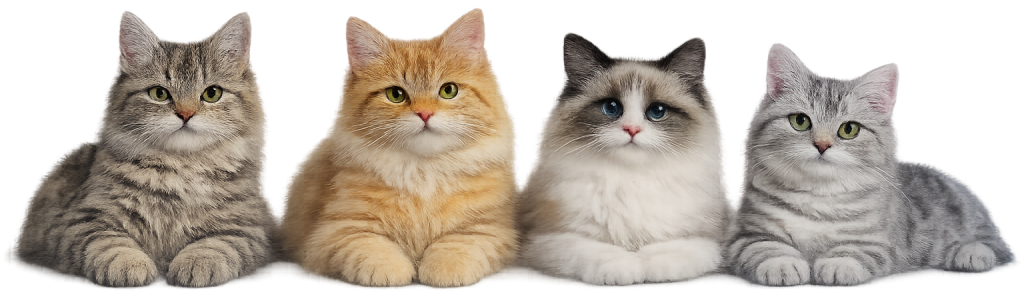
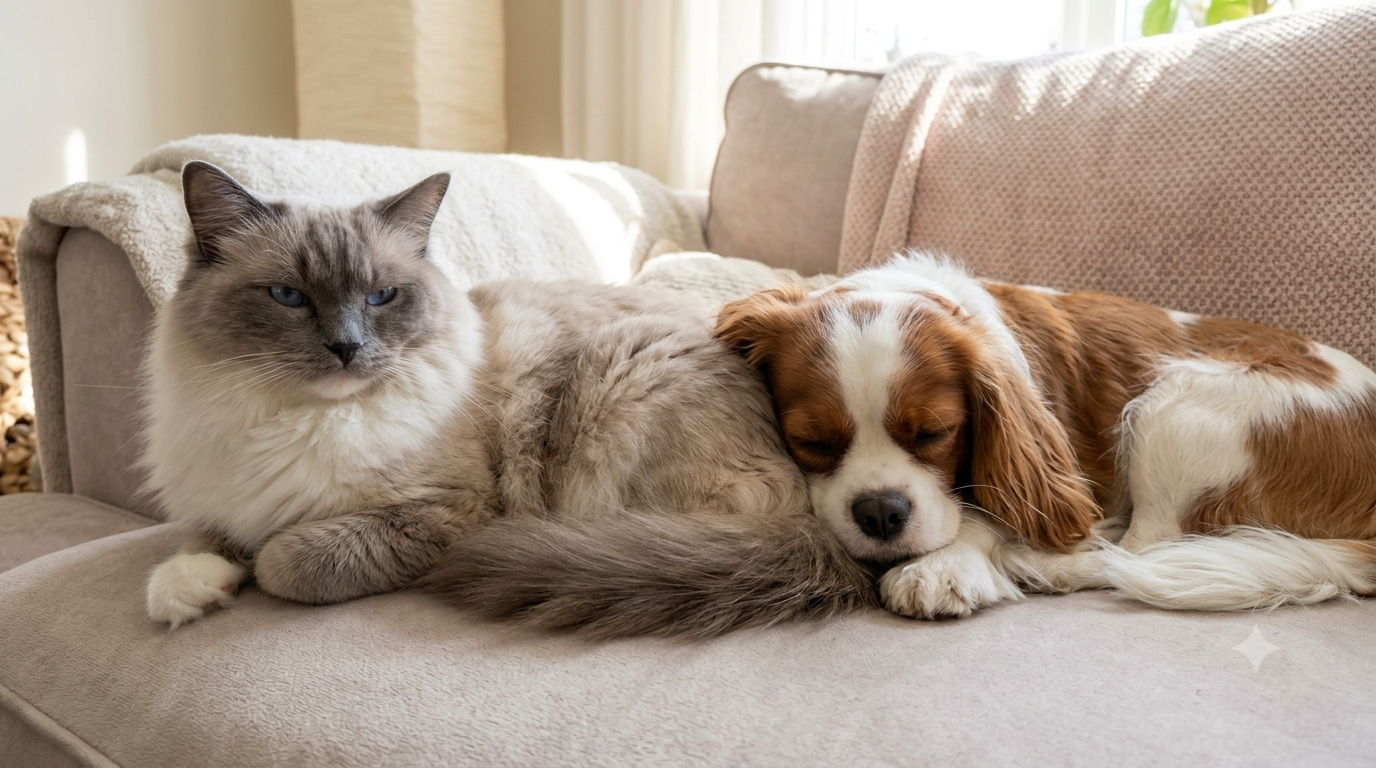
For families considering a multi-pet household, questions about Ragdoll Cats and Other Pets compatibility come up often. The good news is that Ragdolls are generally regarded as one of the more sociable and adaptable breeds when it comes to sharing a home with other animals, thanks to their calm temperament and generally low tendency toward territorial aggression.
That said, successful multi-pet households depend heavily on proper introductions and individual personality, regardless of breed reputation.
Why Ragdolls Tend to Adapt Well
Ragdoll Cats and Other Pets often coexist successfully because of the breed’s generally easygoing nature. Ragdolls are typically less territorial and less prone to dominance-driven behavior compared to some other breeds, which can make shared spaces and resources less contentious.
Their people-oriented personality also means Ragdolls are often more focused on human interaction than establishing strict territory over other animals in the home, which can ease tension during the adjustment period.
Ragdolls With Other Cats
Many Ragdolls do well living with other cats, particularly when introductions are handled gradually. Because Ragdolls tend to be less confrontational, they often adapt to a resident cat’s established routine rather than challenging it outright.
That said, compatibility also depends on the other cat’s personality. A resident cat that is highly territorial or has a history of poor socialization may take longer to adjust, regardless of how accommodating the incoming Ragdoll tends to be.
Ragdolls With Dogs
Ragdoll Cats and Other Pets compatibility often extends successfully to dogs as well, especially calm or well-socialized breeds. Ragdolls’ generally unflappable temperament makes them less likely to panic or flee from a dog’s presence, which can actually help ease the introduction process compared to a more skittish cat.
Even so, the dog’s temperament and prior experience with cats matters significantly. Dogs with a strong prey drive or no prior cat exposure require careful, gradual introductions and, in some cases, professional guidance.
Introducing a Ragdoll to Existing Pets
Regardless of the other animal involved, gradual introductions tend to produce the best long-term outcomes. Keeping pets separated initially, allowing them to become familiar with each other’s scent before direct contact, helps reduce the shock of a sudden face-to-face meeting.
Short, supervised interactions that gradually increase in length allow both animals to build positive associations at their own pace. Providing separate resources, including food, water, litter boxes, and resting spots, reduces competition and potential conflict during the adjustment period.
Patience matters significantly here. Rushing introductions, even between generally sociable animals, increases the likelihood of a negative first impression that can take much longer to overcome than a slower, more deliberate approach.
Signs the Introduction Is Going Well
Positive signs during introductions include relaxed body language, curiosity without aggression, and gradually decreasing distance between the animals over repeated interactions. Occasional hissing or wariness during initial meetings is normal and doesn’t necessarily indicate a poor long-term match.
Signs that the introduction needs to slow down include prolonged hiding, consistent aggression, or refusal to eat, which suggest more time and a more gradual approach are needed before proceeding further.
When Extra Support Helps
If introductions aren’t progressing well despite a gradual approach, consulting a veterinarian or a certified animal behaviorist can help identify specific obstacles and develop a more tailored introduction plan.
Conclusion
Ragdoll Cats and Other Pets generally have good compatibility potential thanks to the breed’s calm, non-confrontational temperament. Whether introducing a Ragdoll to another cat or a dog, gradual, patient introductions remain the most reliable path to a successful long-term relationship between pets.
With the right approach, most Ragdolls settle comfortably into multi-pet households, often becoming easygoing companions to both humans and animals alike.
FAQ
1. Are Ragdoll cats good with other cats? Yes, Ragdolls are generally adaptable and less territorial, though success also depends on the resident cat’s personality.
2. Can Ragdoll cats live safely with dogs? Many Ragdolls do well with calm, well-socialized dogs, though the dog’s temperament and prior cat exposure matter significantly.
3. How long does it take to introduce a Ragdoll to another pet? Introductions can take anywhere from a few days to several weeks depending on both animals’ personalities and comfort levels.
4. What’s the best way to introduce a new pet to a Ragdoll? Gradual scent introduction followed by short, supervised interactions tends to produce the best results.
5. What if my pets aren’t getting along after introductions? Consulting a veterinarian or certified animal behaviorist can help identify specific issues and adjust the introduction approach.