Ragdolls are often described as calm and easygoing, but that reputation sometimes leads new owners to underestimate Ragdoll Cat Playfulness, especially during kittenhood and early adulthood. While Ragdolls generally aren’t as high-energy as some more athletic breeds, they still have real play needs that contribute to their physical health and emotional wellbeing throughout life.
Understanding how playfulness typically shows up and shifts over time helps you provide the right kind of engagement at each stage, rather than assuming your cat needs constant high-intensity activity or, conversely, none at all.
Playfulness in Kittens
Ragdoll Cat Playfulness is usually most intense during kittenhood, similar to most breeds. Kittens use play to develop coordination, practice hunting behaviors, and build social skills, often chasing toys, pouncing, and engaging in short bursts of high energy.
Because Ragdolls mature slowly, this playful kitten phase can last longer than in some faster-maturing breeds, sometimes extending well past the first year. Interactive toys, wand games, and safe climbing opportunities support healthy development during this stage.
How Play Changes in Adulthood
As Ragdolls reach adulthood, Ragdoll Cat Playfulness often shifts toward shorter, more relaxed bursts of activity rather than constant high energy. Many adult Ragdolls still enjoy play, particularly interactive sessions with their owner, but may show less interest in solo play with toys left lying around.
This doesn’t mean play becomes unnecessary. Regular engagement remains important for weight management, mental stimulation, and maintaining the bond between cat and owner, even if sessions are shorter than they were in kittenhood.
Typical Play Styles and Preferences
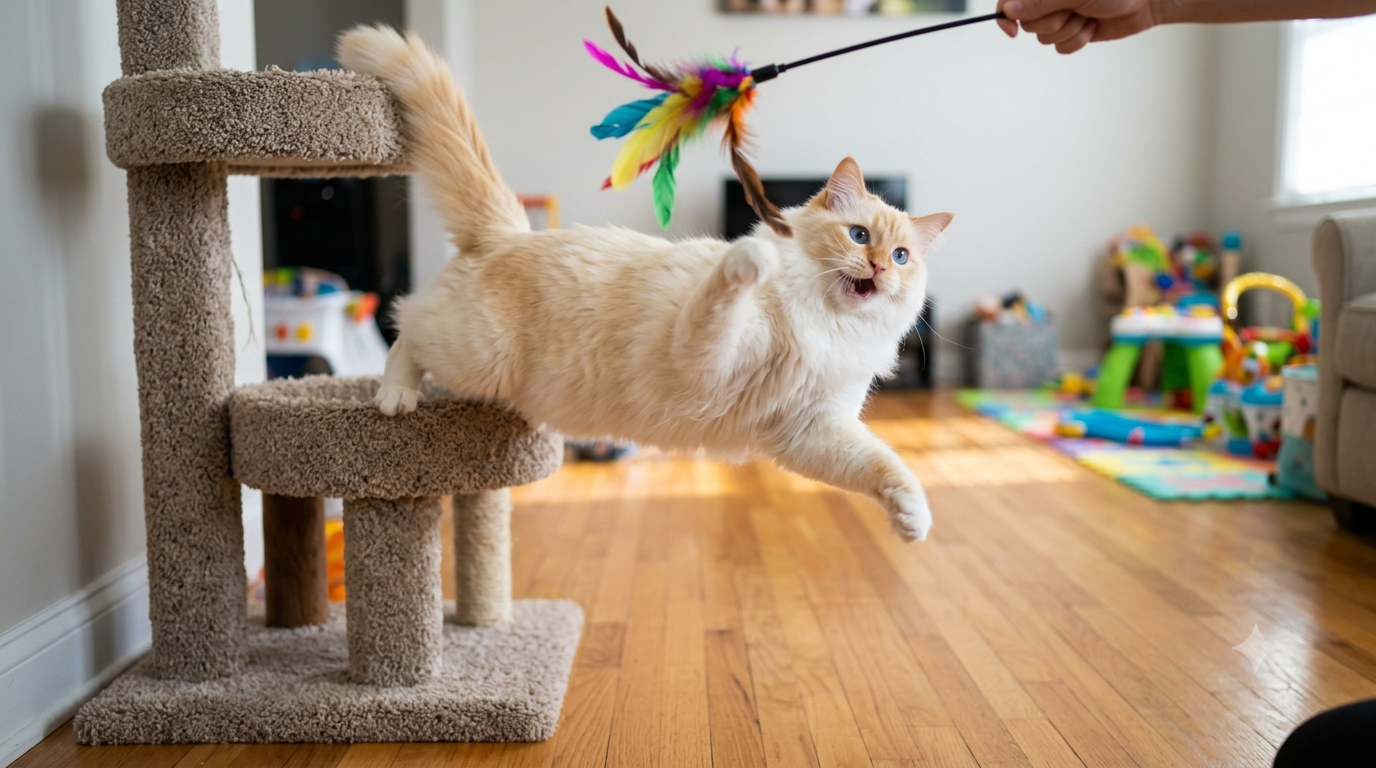
Ragdolls often respond well to interactive toys that mimic prey movement, such as wand toys with feathers or fabric attachments. Because the breed tends to be food-motivated, puzzle feeders that combine play with a food reward are often popular.
Many Ragdolls also enjoy gentle fetch-style play, batting small balls or soft toys back toward their owner, a behavior sometimes noted as more dog-like compared to other breeds. Since Ragdolls tend to prefer floor-level activity over high climbing, play that keeps toys closer to the ground often gets a better response than encouraging jumps to tall furniture.
Individual Variation
Not every Ragdoll follows the same playfulness pattern. Some remain notably playful well into their senior years, while others settle into a calmer routine earlier in adulthood. Personality, early socialization, and overall health all influence how playful an individual cat remains.
Environment matters too. Cats with more enrichment, companionship, and consistent interactive play tend to stay engaged longer than cats in under-stimulating environments.
Signs Your Ragdoll May Need More Engagement
A sudden drop in playfulness, especially paired with reduced appetite, lethargy, or hiding, is worth mentioning to your veterinarian, since it can sometimes indicate an underlying health issue rather than simple personality change.
On the other hand, if your Ragdoll seems restless, is engaging in destructive behavior, or is overeating out of apparent boredom, increasing structured play and enrichment may help address the underlying need for stimulation.
Encouraging Healthy Play Habits
Short, consistent daily play sessions, even just ten to fifteen minutes, tend to be more effective than infrequent, longer sessions. Rotating toys keeps novelty in the environment, since cats often lose interest in the same toy left out continuously.
Because Ragdolls are so people-oriented, interactive play with their owner is often more engaging to them than independent play, making it a valuable part of daily bonding as well as physical activity.
Conclusion
Ragdoll Cat Playfulness tends to be most intense during an extended kittenhood, gradually settling into shorter, more relaxed play sessions in adulthood. While individual personality varies, most Ragdolls continue to benefit from regular interactive play throughout their lives, both for physical health and the strong bond they’re known for with their owners.
Paying attention to changes in your cat’s play habits can also serve as an early indicator of their overall wellbeing, making playtime a valuable part of everyday observation as well as enjoyment.
FAQ
1. Are Ragdoll cats naturally playful? Yes, especially during their extended kittenhood, though playfulness often becomes more relaxed in adulthood.
2. Do adult Ragdolls still need playtime? Yes, regular play supports weight management, mental stimulation, and bonding, even if sessions are shorter than in kittenhood.
3. What toys do Ragdoll cats usually enjoy? Wand toys, puzzle feeders, and floor-level fetch-style toys are often popular with this breed.
4. Why has my adult Ragdoll become less playful? Some reduction in play is normal with age, but a sudden change paired with other symptoms should be discussed with your veterinarian.
5. How much playtime does a Ragdoll need each day? Short, consistent sessions of about ten to fifteen minutes are often more effective than infrequent longer sessions.