Ragdoll cats are renowned for their stunning semi-longhaired coats, which are incredibly soft and luxurious. However, this beautiful fur requires regular attention to stay in top condition. Learning how to brush Ragdoll cat fur effectively is crucial for preventing mats, reducing shedding, and maintaining their overall skin and coat health. Regular grooming also strengthens the bond between you and your cherished feline companion.
Maintaining a Ragdoll’s coat isn’t just about aesthetics; it’s a vital component of their well-being. Their semi-long hair, while beautiful, can easily tangle if neglected. Moreover, consistent brushing helps distribute natural oils, keeping their skin moisturized and their coat glossy. Furthermore, regular grooming sessions provide an excellent opportunity to check for any skin irritations, parasites, or unusual lumps that might require veterinary attention. Therefore, establishing a routine to groom your Ragdoll is an act of love and responsible pet ownership.
Essential Tools for Brushing Your Ragdoll
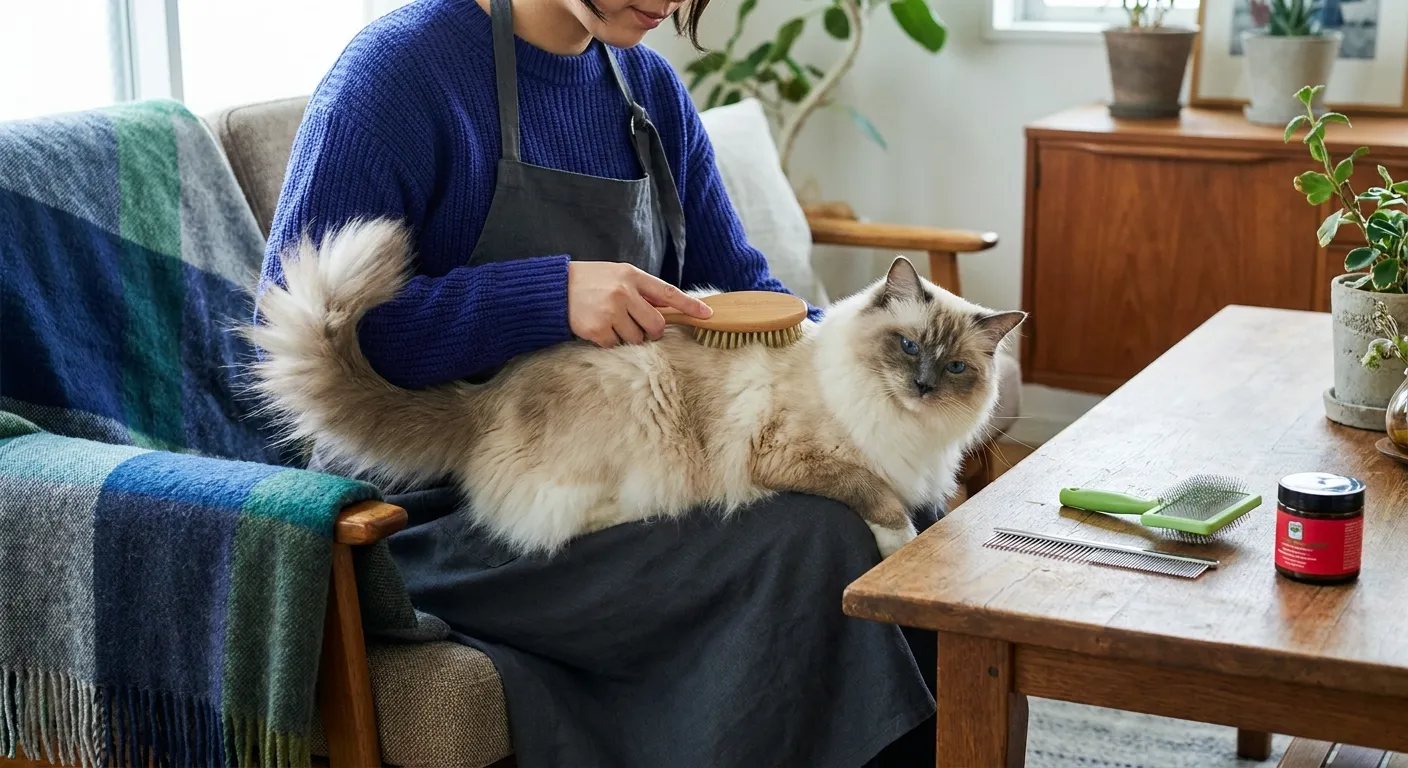
Before you begin, gather the right tools. A good quality slicker brush is indispensable for detangling and removing loose undercoat without irritating their delicate skin. This type of brush features fine, short wires packed closely together on a flat or curved surface, making it ideal for gently working through dense fur. Additionally, a wide-toothed comb, preferably metal, is excellent for working through any stubborn knots and checking for missed areas. The wider spacing of the teeth prevents snagging and pulling, ensuring a comfortable experience for your cat. Some owners also find a rubber curry brush or grooming glove useful for a final polish and to stimulate circulation. These tools are especially good for removing loose surface hair and providing a gentle massage. Always ensure your tools are clean and in good repair to avoid discomfort for your cat. Furthermore, consider having a pair of blunt-nosed scissors on hand for carefully snipping out any extremely stubborn mats that cannot be combed through, though this should be done with extreme caution.
Choosing the Right Brushes for Your Ragdoll’s Coat
Selecting the correct grooming tools is paramount for a successful and pleasant experience for both you and your Ragdoll. For example, a quality slicker brush with protected tips can effectively reach the undercoat without scratching the skin. Moreover, a stainless steel comb with both wide and narrow teeth is versatile for different areas of the coat. The wide teeth are perfect for initial detangling, while the narrower teeth can be used for finer grooming, such as around the face or for checking for any remaining snags. Additionally, a soft bristle brush can be used for a final buff, enhancing the coat’s shine and distributing natural oils evenly. Investing in good quality tools will make the process of grooming your Ragdoll much easier and more effective in the long run. Cheap, flimsy tools can break easily or, worse, cause discomfort or even injury to your pet.
Techniques to Brush Ragdoll Cat Fur Gently
Start your grooming sessions when your Ragdoll is relaxed and calm. This might be after a meal, a nap, or a gentle play session. Begin with gentle strokes, working from the head towards the tail. It’s important to use light pressure, allowing the brush to glide through the fur. Pay special attention to areas prone to matting, such as under the chin, behind the ears, armpits, and the breeches (fluffy fur on their hind legs). These areas experience more friction and are therefore more susceptible to tangles. For any tangles, use the wide-toothed comb to gently tease them apart, rather than pulling. Hold the fur at the base of the mat to prevent pulling on the skin while you work. Always brush in the direction of hair growth. This natural motion is more comfortable for your cat and helps smooth the coat effectively. Keep sessions short and positive, rewarding your Ragdoll with praise or a small treat. Aim for 2-3 times a week, or daily during shedding seasons, to keep their coat pristine. Consistent, short sessions are far more effective than infrequent, long ones that might stress your cat.
Developing a Consistent Grooming Routine
Establishing a regular grooming routine is key to maintaining your Ragdoll’s luxurious coat and ensuring they remain comfortable with the process. Ideally, start grooming your Ragdoll from a young age so they become accustomed to the handling. This early exposure helps them associate grooming with positive experiences. For instance, you might introduce the brush for just a minute or two initially, gradually increasing the duration as your cat becomes more comfortable. Furthermore, always choose a quiet time and place where your Ragdoll feels secure and won’t be easily distracted. Some owners find a raised surface, like a grooming table or even a sturdy counter, helps keep the cat still and at a comfortable height for brushing. Remember, patience is a virtue when it comes to grooming. If your cat shows signs of stress or discomfort, gently end the session and try again later. For an engaging break, consider offering an interactive toy to reward their cooperation.
Benefits Beyond Beauty: The Health Aspects of Grooming
Regular brushing is more than just maintaining aesthetics; it’s a vital part of your Ragdoll’s health regimen. It helps distribute natural oils, which are essential for a healthy skin barrier and a shiny coat. Furthermore, brushing prevents skin issues by removing dead skin cells and preventing debris from accumulating. This also allows you to check for any lumps, bumps, or parasites that might otherwise go unnoticed. Early detection of these issues can significantly impact treatment outcomes. Moreover, reducing shedding through regular grooming means less ingested hair, which in turn reduces the likelihood of hairballs. Hairballs can cause digestive upset and, in severe cases, intestinal blockages. Consequently, a consistent grooming routine contributes significantly to your Ragdoll’s overall physical health and comfort. Checking their fur also provides an opportunity to inspect their paws, ears, and teeth, ensuring all aspects of their health are monitored. You might even discover a need for new puzzle toys to keep them engaged after a good brush.
Addressing Mats and Tangles Safely
Mats and tangles can be a significant problem for Ragdolls if their coat is not regularly maintained. These knots can pull on the skin, causing pain and discomfort, and can even lead to skin infections if moisture gets trapped underneath. When encountering a mat, resist the urge to pull or cut it out hastily. Instead, use your wide-toothed comb and gently work from the outside edges of the mat inwards, teasing the hairs apart little by little. You can also apply a small amount of cornstarch or a specialized detangling spray to help loosen the hairs. For particularly stubborn or large mats, it might be necessary to carefully use blunt-nosed scissors, but always point them away from the skin and slide a comb between the mat and the skin as a protective barrier. If you are unsure or the matting is severe, it’s always best to consult a professional groomer or your veterinarian. They have the expertise and specialized tools to safely remove mats without causing stress or injury to your beloved cat. Effective grooming to brush Ragdoll cat fur is key to preventing these issues.
Making Grooming a Positive Experience
A positive grooming experience is crucial for building trust and ensuring your Ragdoll tolerates, and perhaps even enjoys, their brushing sessions. Always approach your cat with a calm and reassuring demeanor. Speak to them in soft tones and offer plenty of praise throughout the process. Furthermore, associate grooming with rewards. This could be a favorite treat, a few minutes of playtime with a catnip toy, or simply some affectionate petting. If your cat becomes agitated or tries to escape, do not force them. Instead, end the session gently and try again later when they are more receptive. It’s better to have several short, pleasant sessions than one long, stressful one. Consistency and positive reinforcement are the cornerstones of successful grooming. Moreover, ensure the environment is free from loud noises or sudden movements that could startle your cat. A relaxed atmosphere contributes significantly to a successful grooming session. For more insights, you can always check out our Blog for additional tips.
Overcoming Common Grooming Challenges
Even with the best intentions, grooming a Ragdoll can present challenges. Some cats may be naturally more resistant to being handled, while others might develop an aversion due to a previous negative experience. If your Ragdoll is particularly uncooperative, try breaking down the grooming process into even smaller steps. For example, on one day, simply let them sniff the brush and offer a treat. The next day, gently touch the brush to their fur for a second, then reward. Gradually build up to short brushing strokes. Persistence and patience are vital here. Additionally, consider the time of day; some cats are more tolerant in the morning, others in the evening. If your cat is still highly resistant, consider consulting with a professional groomer or your veterinarian for advice on behavioral modification techniques or if there might be an underlying issue causing their discomfort. They can offer tailored strategies to help your Ragdoll adapt to grooming. Remember that learning how to effectively brush Ragdoll cat fur is a journey, not a destination.
Seasonal Grooming Considerations
Ragdolls, like many long-haired breeds, experience seasonal shedding. During these periods, typically in spring and autumn, their grooming needs will increase. It is essential to brush Ragdoll cat fur more frequently, perhaps even daily, to manage the increased shedding and prevent mats. The undercoat often sheds more heavily, and if not removed, it can quickly form dense tangles. Furthermore, during warmer months, extra brushing helps to thin out their coat, which can make them more comfortable and prevent overheating. Conversely, in colder months, while shedding might decrease, regular brushing is still important to keep their coat healthy and insulating. Paying close attention to these seasonal changes in their coat will help you adjust your grooming routine accordingly, ensuring your Ragdoll remains comfortable and healthy year-round. A consistent approach to how you brush a Ragdoll cat is always beneficial.
The Importance of Diet for Coat Health
While external grooming is crucial, a healthy diet plays an equally significant role in maintaining the lustrous coat of your Ragdoll. High-quality cat food, rich in essential fatty acids like Omega-3 and Omega-6, can significantly improve coat health from the inside out. These nutrients contribute to a shiny, soft coat and healthy skin, making the fur less prone to dryness and breakage, which can lead to matting. Furthermore, proper hydration is vital; ensure your Ragdoll always has access to fresh, clean water. A well-hydrated cat will have healthier skin and a more resilient coat. Consult your veterinarian for recommendations on the best diet and any supplements that might benefit your Ragdoll’s specific needs. A healthy diet complements your efforts to brush Ragdoll cat fur, resulting in a truly magnificent coat. For more information on pet product recommendations, please review our Affiliate Disclaimer.
The Bond-Building Aspect of Grooming
Beyond the practical benefits, grooming sessions offer a unique opportunity to strengthen the bond between you and your Ragdoll. The gentle interaction, the soothing strokes, and the undivided attention you provide during grooming can be deeply comforting for your feline friend. Many Ragdolls, known for their affectionate nature, genuinely enjoy the one-on-one time with their human companions. This regular physical contact fosters trust and reinforces your role as a caring guardian. It’s a quiet, intimate moment where you can connect on a deeper level, transforming a necessary chore into a cherished ritual. Therefore, view each grooming session not just as a task, but as a special time to reinforce your loving relationship. Learning to properly groom your Ragdoll cat builds a stronger relationship.
Conclusion
Mastering the gentle art of grooming is an essential part of caring for your Ragdoll cat. From selecting the right tools to employing gentle techniques and establishing a consistent routine, every step contributes to their health and happiness. Regular grooming not only keeps their magnificent coat free of mats and reduces shedding but also provides a valuable opportunity to monitor their skin health and strengthen the special bond you share. By integrating these practices into your routine, you ensure your Ragdoll remains comfortable, healthy, and continues to flaunt their magnificent, flowing coat with pride. Remember, patience, consistency, and positive reinforcement are your best allies in making grooming a rewarding experience for both of you. The effort you put into learning how to effectively brush Ragdoll cat fur will undoubtedly pay off in a happy, healthy, and beautifully groomed companion.
FAQ
How often should I groom my Ragdoll cat?
Ideally, you should groom your Ragdoll cat 2-3 times a week. During shedding seasons (typically spring and autumn), daily brushing may be necessary to prevent mats and manage loose fur.
What are the best brushes for a Ragdoll’s long coat?
A good quality slicker brush is excellent for detangling and removing undercoat. A wide-toothed metal comb is essential for knots and checking for missed areas. A rubber curry brush or grooming glove can also be used for finishing touches.
My Ragdoll hates being brushed. What should I do?
Start with very short sessions (a minute or less), using gentle strokes and rewarding with treats or praise. Gradually increase the duration as your cat becomes more comfortable. If resistance continues, consult a professional groomer or veterinarian for advice on behavioral techniques.
Can grooming help reduce hairballs in Ragdolls?
Yes, absolutely. Regular grooming significantly reduces the amount of loose fur your Ragdoll ingests during self-grooming. This, in turn, helps to minimize the formation of hairballs, which can cause digestive issues.
What are the benefits of consistent feline coat care besides aesthetics?
Consistent coat care offers numerous health benefits. It helps distribute natural skin oils, prevents skin irritations and infections, allows for early detection of lumps or parasites, and reduces the risk of hairballs. It also strengthens the bond between you and your cat.