Regular grooming is a cornerstone of Ragdoll cat care. Mastering effective ragdoll cat grooming tips is essential for maintaining their luxurious coat and overall well-being. While Ragdolls have silky, semi-longhaired coats that are less prone to matting than some other long-haired breeds, they still require consistent attention. With pet humanization driving a stronger focus on pet wellness – a $70-$80 billion segment of the pet industry in 2025 – dedicated grooming routines are not just about aesthetics; they’re about preventive health and strengthening the bond with your feline companion. Therefore, understanding the nuances of their grooming needs is paramount for every Ragdoll owner.
Why Regular Grooming is Crucial for Ragdolls
Beyond keeping your Ragdoll looking magnificent, grooming offers several health benefits. For instance, it actively contributes to their skin and coat vitality. Furthermore, it helps prevent common issues that can lead to discomfort or more serious health concerns.
- Prevents Matting: Although less prone, mats can still form, especially in high-friction areas like behind the ears, armpits, and hindquarters. Mats are painful and can lead to skin irritation or infections. Therefore, regular brushing is a key preventative measure.
- Reduces Hairballs: Regular brushing removes loose fur, significantly reducing the amount ingested during self-grooming. This action thereby minimizes hairball formation and digestive issues. Consequently, your Ragdoll will be more comfortable.
- Monitors Skin & Coat Health: Grooming sessions are an excellent opportunity to check for fleas, ticks, skin lesions, bumps, or any changes in their coat that might indicate an underlying health issue. In fact, early detection can make a significant difference.
- Enhances Bonding: Gentle grooming can be a positive, relaxing experience for both you and your Ragdoll, reinforcing your connection. This shared activity builds trust and affection.
Essential Ragdoll Cat Grooming Tools and Techniques
For most Ragdolls, brushing 2-3 times per week is ideal. However, this frequency should increase to daily during seasonal shedding in spring and autumn. Starting grooming early as a kitten helps establish it as a positive bonding activity. Moreover, having the right tools makes the process much smoother for both of you.
Recommended Grooming Tools:
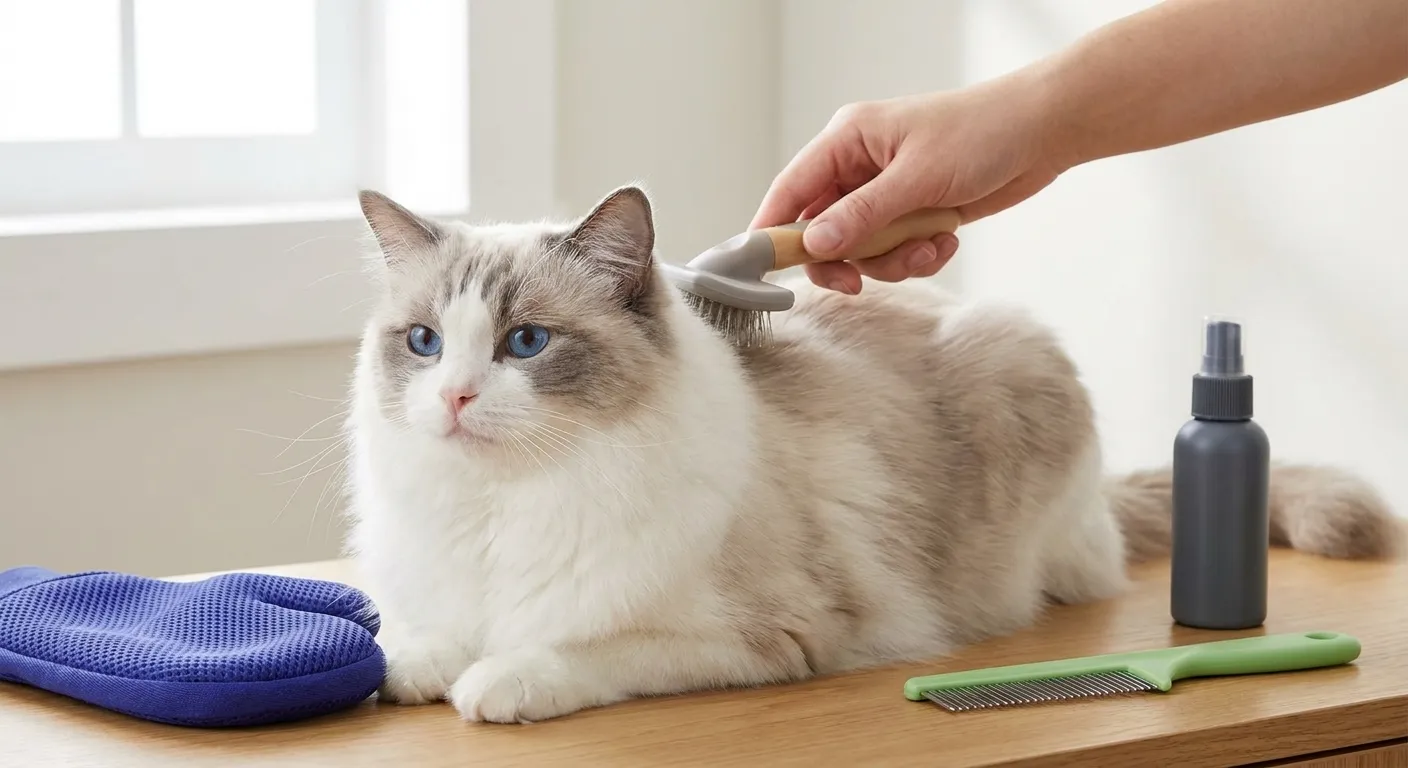
- Slicker Brush: This tool is excellent for removing loose fur and detangling minor knots. Choose one with fine, bent wire bristles.
- Wide-Tooth Comb: Ideal for working through longer fur, checking for mats, and ensuring the coat is thoroughly detangled without pulling. This comb is particularly useful for delicate areas.
- Grooming Mitt/Rubber Brush: Great for a final polish, distributing natural oils, and removing any remaining loose hairs, especially during shedding seasons. It also provides a gentle massage.
- Nail Clippers: Keep their claws trimmed to prevent snags and discomfort. Regular nail trims are a vital part of overall indoor Ragdoll cat care tips.
- Cat-Specific Toothbrush & Toothpaste: Essential for oral hygiene, given that periodontal disease has an 8.84% prevalence in Ragdolls. This helps prevent serious dental issues.
Step-by-Step Brushing Routine for Your Ragdoll
Implementing a consistent brushing routine is crucial for maintaining your Ragdoll’s coat. These ragdoll cat grooming tips will guide you through the process, ensuring it’s a calm and effective experience for your feline friend. Preparing adequately makes a significant difference.
- Choose a Quiet Time: Select a moment when your Ragdoll is relaxed and calm. A quiet, comfortable surface works best. Consequently, they will be more receptive to grooming.
- Start Gentle: Begin with the slicker brush, using short, gentle strokes, working from head to tail. Pay special attention to areas prone to matting: under the chin, behind the ears, under the ‘armpits,’ and around the ‘breeches’ (hind legs).
- Use the Wide-Tooth Comb: Follow up with the wide-tooth comb to ensure all tangles and potential mats are removed. This step is particularly important for their longer fur. Work slowly and gently, never pulling.
- Address Mats Carefully: If you encounter a mat, do not pull or cut it with scissors. Instead, try to gently tease it apart with your fingers or the wide-tooth comb. For stubborn mats, special dematting tools or professional help may be necessary.
- Finish with a Grooming Mitt: Use a rubber brush or grooming mitt to smooth the coat, remove any remaining loose hairs, and distribute natural oils for a healthy shine. This also provides a pleasant massage.
- Positive Reinforcement: Always end grooming sessions with praise, treats, and affection. This helps your Ragdoll associate grooming with positive experiences.
Beyond Brushing: Comprehensive Ragdoll Grooming
While brushing forms the core of coat maintenance, a holistic approach to your Ragdoll’s grooming involves several other key areas. These additional ragdoll cat grooming tips contribute significantly to their overall health and comfort. Furthermore, they help prevent potential health problems.
Nail Trimming: A Gentle Approach
Trimming your Ragdoll’s nails regularly is important for their comfort and to prevent damage to your furniture. Generally, every 2-4 weeks is sufficient. Use cat-specific clippers and only snip the very tip, avoiding the quick (the pink part containing blood vessels and nerves). If you are unsure, consult your veterinarian or a professional groomer. Many owners find it helpful to introduce nail trimming gradually, perhaps just one or two claws at a time, followed by a treat. This makes the experience less stressful for the cat. For more on essential items, check out Ragdoll Cat Owner Supplies You Truly Need.
Dental Care: Protecting Their Pearly Whites
Oral hygiene is often overlooked but is critical for your Ragdoll’s health. Periodontal disease is common in cats and can lead to serious systemic health issues. Brushing your Ragdoll’s teeth several times a week with a cat-specific toothbrush and toothpaste is ideal. Never use human toothpaste, as it can be toxic to cats. If your cat resists, start slowly with just applying toothpaste to their gums, gradually introducing the brush. Dental treats and water additives can also help, but manual brushing is the most effective method. For more on health, consider reading about Ragdoll Cat Health Problems Every Owner Should Know.
Ear Cleaning: Keeping Them Clear
Regularly check your Ragdoll’s ears for dirt, wax buildup, or any signs of infection (redness, odor, excessive scratching). Clean them gently with a vet-approved ear cleaner and a cotton ball. Avoid using cotton swabs, which can push debris further into the ear canal and potentially cause damage. If you notice any unusual discharge or a strong odor, it’s best to consult your veterinarian, as this could indicate an infection. Keeping ears clean is a simple yet effective part of these ragdoll cat grooming tips.
Bathing: When and How
Ragdolls generally do not require frequent bathing due to their self-grooming habits and coat texture. However, a bath might be necessary if they get particularly dirty, have skin issues, or are shedding heavily. Use a cat-specific shampoo that is gentle and moisturizing. Ensure the water is lukewarm and that you rinse their coat thoroughly to prevent skin irritation from shampoo residue. Dry them gently with a towel and ensure they are completely dry to avoid chills, especially in cooler weather. For first-time owners, understanding these aspects can be very helpful; explore Ragdoll Cats for Beginners: What You Should Know.
Addressing Common Grooming Challenges
Even with the best intentions and the most effective ragdoll cat grooming tips, challenges can arise. Understanding how to handle them calmly and effectively will make the grooming experience more positive for both you and your Ragdoll. Patience and consistency are your greatest allies.
Dealing with Mats and Tangles
Despite their less-prone-to-matting coat, Ragdolls can still develop tangles. Prevention is always better than cure, so consistent brushing is key. If you find a mat, avoid pulling at it. Instead, use a wide-tooth comb or a specialized dematting tool. Gently work the mat from the outer edges inward, using a light detangling spray if needed. For severe mats, especially those close to the skin, seeking professional grooming assistance is often the safest and most humane option. Incorrectly removing mats can cause significant pain and skin damage to your cat.
Overcoming Grooming Resistance
Some Ragdolls may initially resist grooming. It is important to introduce grooming gradually and make it a positive experience. Start with short sessions, just a few minutes at a time, and always reward your cat with treats and praise afterward. If your Ragdoll becomes agitated, stop the session and try again later. Never force grooming, as this can create a negative association. Consistency and positive reinforcement will eventually help your cat accept and even enjoy their grooming routine. Understanding their temperament, as discussed in Are Ragdoll Cats Friendly With Everyone, can also help.
Seasonal Shedding Strategies
Ragdolls typically shed more during spring and autumn. During these periods, increase the frequency of your brushing to daily. This helps manage the excess fur, prevents matting, and reduces hairballs. A grooming mitt or rubber brush can be particularly effective during shedding season for collecting loose hairs. Consider adding supplements like omega-3 fatty acids to their diet, which can support coat health and potentially reduce shedding. Always consult your veterinarian before adding any supplements.
The Long-Term Benefits of Consistent Grooming
Implementing these ragdoll cat grooming tips consistently offers profound long-term benefits for your feline companion. Beyond maintaining their stunning appearance, a regular grooming routine significantly contributes to their overall health, happiness, and your bond together. It is an investment in their well-being.
A well-groomed Ragdoll is less likely to suffer from skin irritations, infections, or digestive issues caused by hairballs. Their coat will remain soft, silky, and free from painful mats, allowing them to move comfortably and confidently. Furthermore, the regular physical interaction during grooming strengthens the trust and affection between you and your cat, fostering a deeper connection. This routine also provides an opportunity for early detection of potential health concerns, as you’ll be regularly checking their skin, coat, and body for any abnormalities. In essence, consistent grooming is a holistic approach to Ragdoll care, embodying the best practices for a healthy and thriving pet. For more insights into their care, you might find Busy People Ragdoll Cats Guide for Daily Care useful.
For further reading on pet care and feline health, consider exploring resources from reputable organizations like the ASPCA or the Cornell Feline Health Center.
Conclusion
Mastering effective ragdoll cat grooming tips is an essential part of responsible Ragdoll ownership. From regular brushing to nail trims, dental care, and occasional baths, each aspect contributes to their health, comfort, and beauty. By establishing a consistent and positive grooming routine, you not only maintain their pristine coat but also strengthen your bond and ensure a happier, healthier life for your cherished feline companion. Remember, patience, gentle handling, and positive reinforcement are key to making grooming a joyful experience for both of you. Embrace these practices, and your Ragdoll will thank you with purrs and a magnificent, well-cared-for coat.
FAQ
How often should I brush my Ragdoll cat’s fur?
For most Ragdolls, brushing 2-3 times per week is ideal. However, during seasonal shedding periods in spring and autumn, it’s beneficial to increase brushing to daily to manage loose fur and prevent mats.
What kind of brush is best for a Ragdoll’s long coat?
A slicker brush is excellent for removing loose fur and minor tangles. A wide-tooth comb is also essential for working through longer sections and checking for mats. A grooming mitt can be used for a final polish.
Do Ragdoll cats need baths?
Ragdolls generally do not require frequent bathing. Their self-grooming habits and coat texture keep them quite clean. Baths are usually only necessary if they get particularly dirty, have skin issues, or during heavy shedding seasons.
How can I prevent hairballs in my Ragdoll?
Regular brushing is the most effective way to prevent hairballs. By removing loose fur before your cat can ingest it during self-grooming, you significantly reduce hairball formation. Special hairball control diets and treats can also help.
Is dental care important for Ragdolls?
Yes, dental care is extremely important. Periodontal disease is common in cats and can lead to serious health problems. Brushing your Ragdoll’s teeth several times a week with cat-specific toothpaste and a toothbrush is highly recommended for optimal oral hygiene.
Related reading: